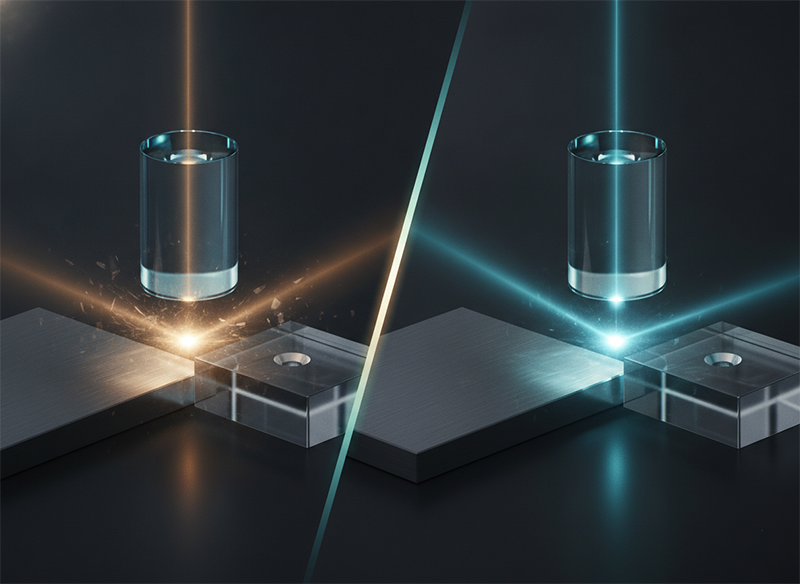
The cleaner pulse can be the one that cracks your vias. That sentence sounds wrong, which is exactly why so many TGV processes get specified backward — chosen on entrance-hole…
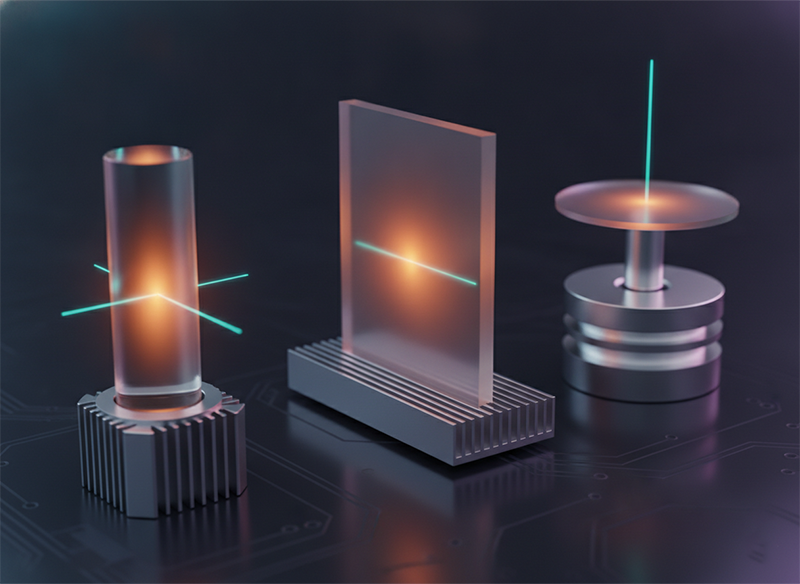
Faced with three amplifier architectures — rod, slab, and disk — most engineers treat them as three separate technologies to study one by one. They are easier to understand than…
“Cold laser processing” is one of the most useful terms in ultrafast machining and one of the most misleading. The name suggests a gentle, low-energy beam, which is the opposite…
Most laser processes are judged by how cleanly they remove material. Laser lift-off is judged by the opposite — how well the material you are not trying to touch survives.…
With the advancement of laser technology, the industry’s requirements for the reliability of solid-state lasers have become increasingly stringent. The optical structure is the foundation for stable operation, and the electro-control…
Drilling a hole through glass sounds like it should be a matter of finding a strong enough laser. It isn’t. Glass is transparent, brittle, and unforgiving, and the reason TGV…
Two ultrafast lasers can both say “300W” on the front of the datasheet and behave like different machines. The number is easy to compare. What it costs to reach that…
When engineers compare lasers, they reach first for wavelength and power — the two numbers printed largest on every datasheet. For materials processing, that habit skips the variable that often…