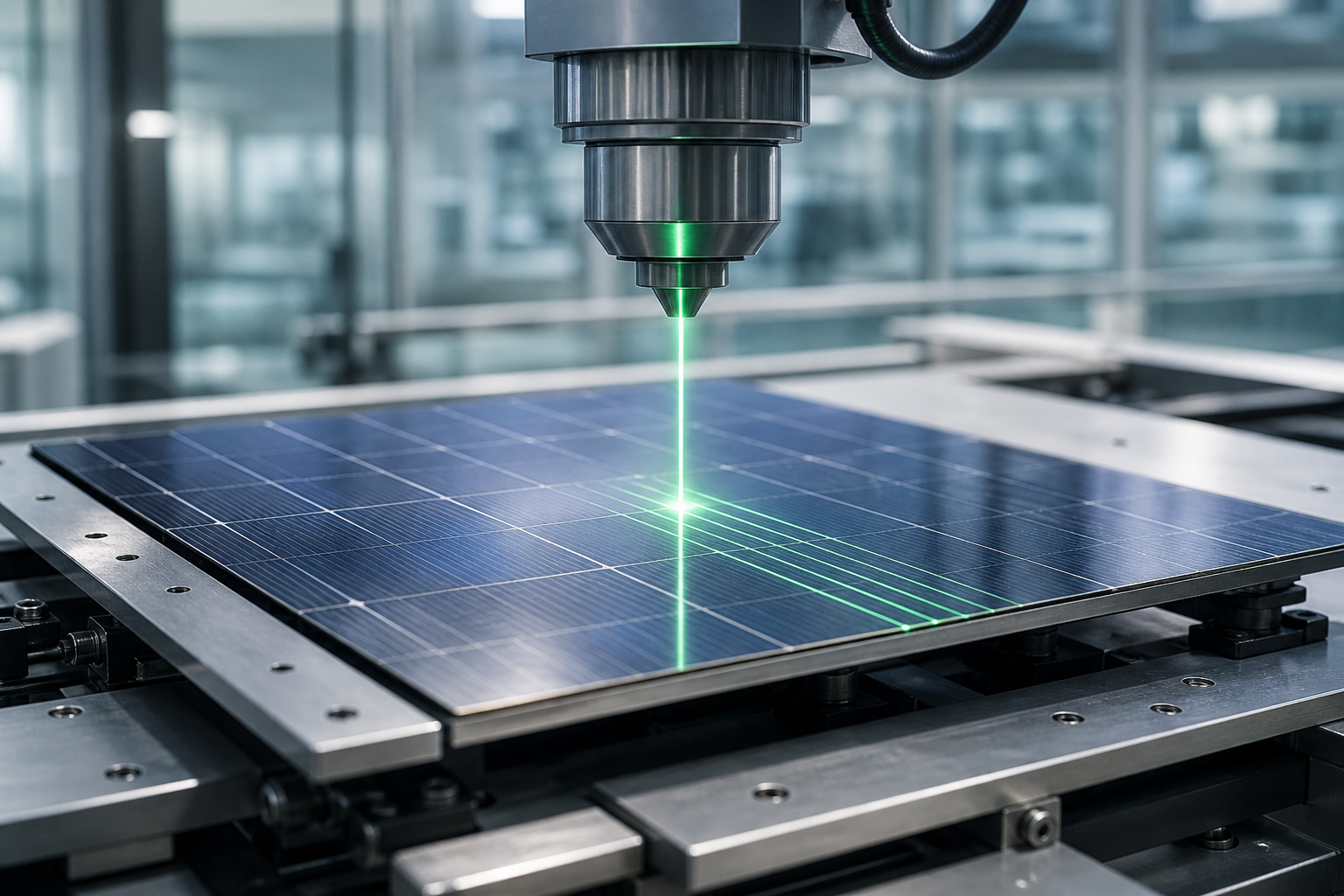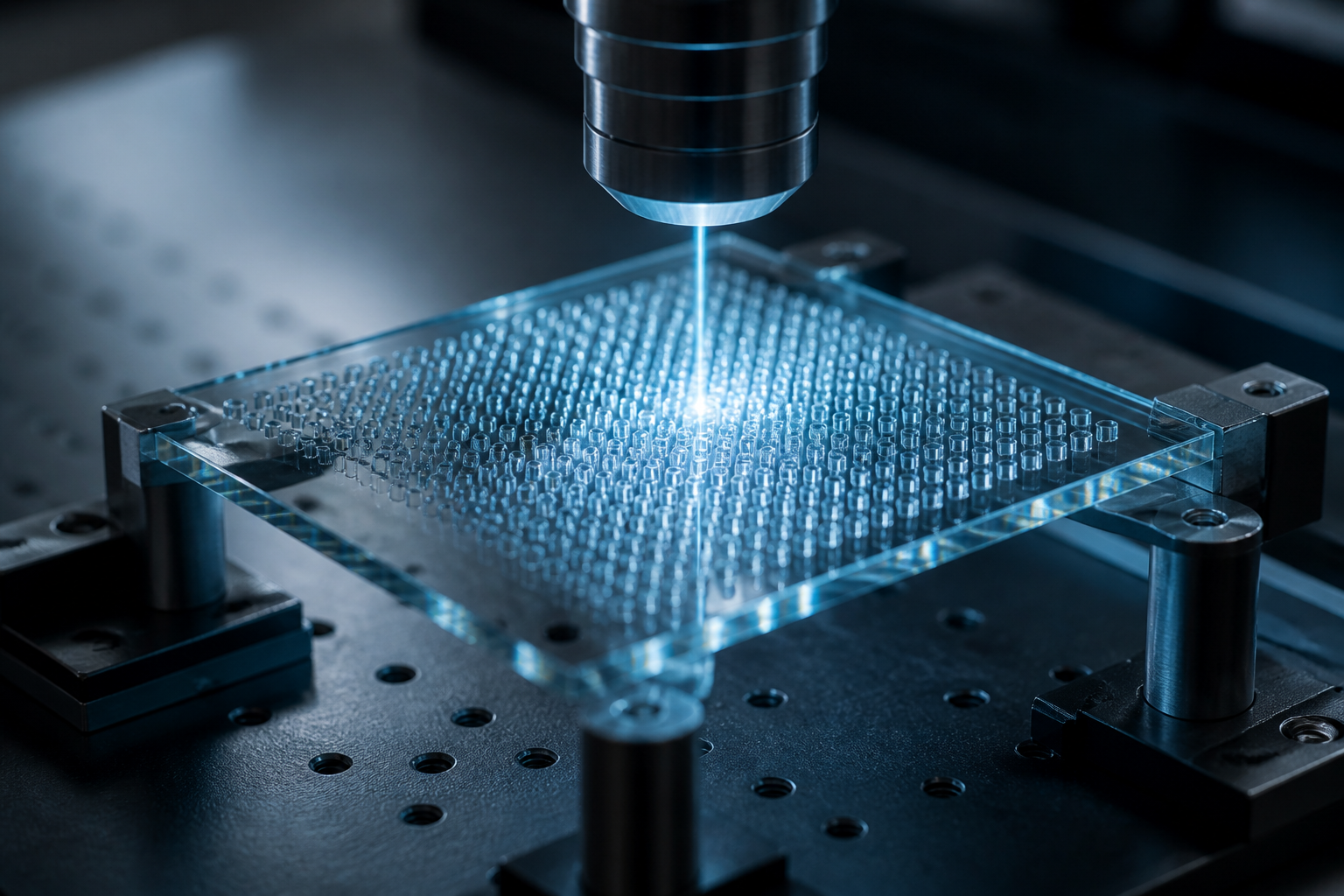
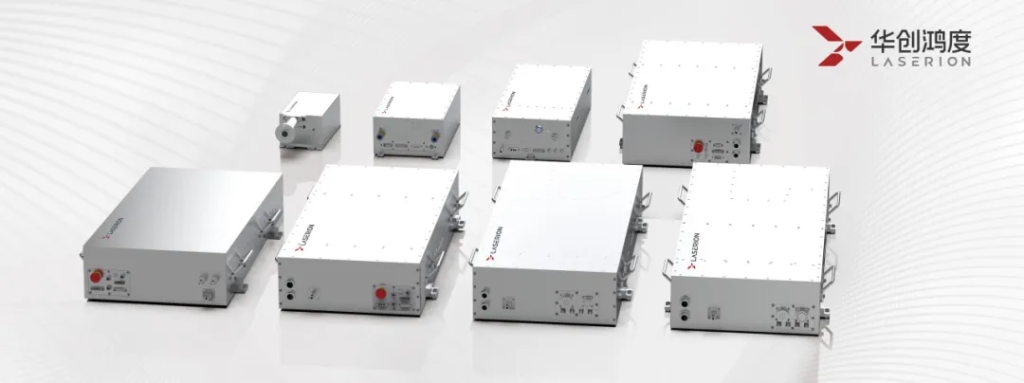
△ Huachuang Hongdu Highly Reliable Solid Lasers
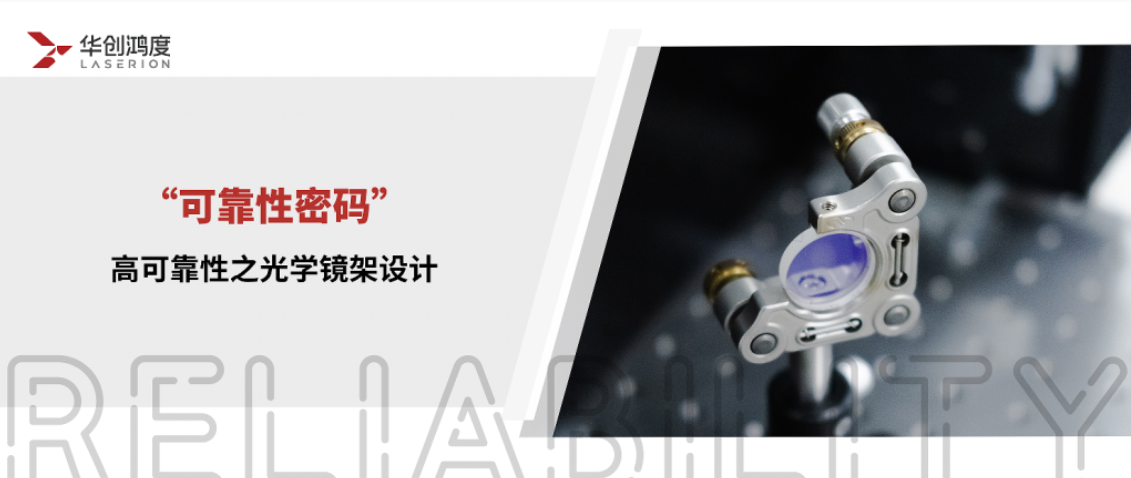
The internal laser cavity optical mirror mount serves as the carrier and adjustment component for core optical elements such as resonator mirrors, reflectors, and focusing mirrors, and is a critical subsystem determining the overall reliability of the laser system. Traditional mirror mounts are prone to thermal deformation, vibration misalignment, thread creep, and uneven clamping stress, which can easily cause beam drift, power attenuation, and even damage to optical components, significantly shortening the lifespan of lasers. Therefore, developing specialized mirror frames with high rigidity, low thermal sensitivity, high stability, and long service life is the core technological pathway to break through the bottleneck of high reliability in solid-state lasers.
This paper focuses on the high reliability requirements of solid-state lasers, providing an in-depth analysis of the failure causes of mirror mounts, Surrounding material selection, structural optimization, precise adjustment, and environmental interference resistance core dimensions, this paper elaborates on the design principles and key technologies of high-reliability mirror frames, providing technical references for enhancing the reliability of laser systems.
① Positioning instability caused by environmental disturbances
During the operation of the laser, the pump source generates heat, causing the cavity temperature to rise; the thermal expansion mismatch between the mirror frame and optical components due to high-temperature cycling leads to thermal stress and deformation offsets; Equipment vibration on industrial sites and mechanical shock in the transportation process will destroy the original positioning accuracy of the mirror frames, causing the tilt angle of the lens to shift and the center of the lens.In addition, dust, moisture, and corrosive gases can easily enter the adjustment gaps and holding areas of the frame, accelerating component wear and corrosion, which further compromises structural stability.
② Long-term failure caused by structural design defects
Conventional mirror racks mostly use ordinary metal profiles coupled with simple screw adjustment structures, and there are three core shortcomings:
③ Insufficient material adaptability exacerbates performance degradation
The mirror base material does not match the thermal expansion coefficient of the optical components, which is the main reason for the loss of control of the beam direction under high temperature conditions. Ordinary steel has poor corrosion resistance and is prone to rust and stiffness in harsh environments, causing adjustment to fail; Part of the lightweight material’s stiffness and thermal conductivity are imbalanced, which can not withstand external force shock, and it is difficult to quickly dissipate the optical element waste heat, aggravating the accumulation of thermal deformation, ultimately causing a cliff-bottom decline in the reliability of the laser entire machine.
In view of the stringent operating conditions required for solid-state lasers, high-reliability mirror mounts must balance five core characteristics: structural rigidity, thermal compatibility, adjustment precision, anti-interference capability, and long-term stability , adhering to the following design principles:
① High performance material selection and thermal adaptation optimization
Materials are the basis of the performance of high-reliability mirrors, and the selection needs to take into account stiffness, thermal stability, thermal conductivity and corrosion resistance, abandoning the single material selection concept and adopting a gradient material and heat matching design scheme.
The matrix material should preferably be selected from low thermal expansion stainless steel, Invar , and copper-tungsten alloy:
The thermal expansion coefficient of different mirroring materials compared with the thermal deformation characteristics, as shown in the following table:
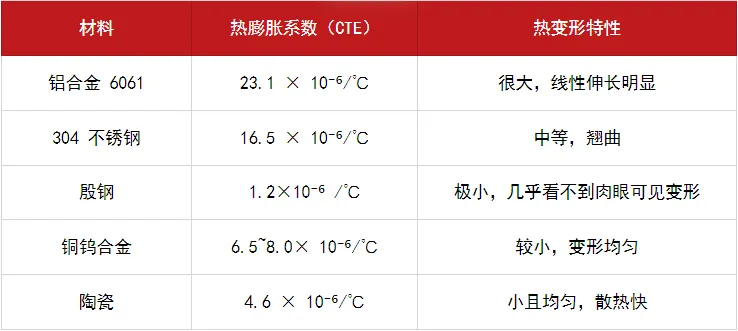
To address thermal compatibility issues, adopt “matching materials” or “thermal stress compensation” design approaches, controlling the difference in thermal expansion coefficients between the frame holding areas and optical components within 1×10⁻⁶/°C. Within this range, avoid squeezing or loosening under high and low temperatures, thereby achieving stable optical paths across the full temperature domain. For high-power ultrafast lasers, microfluidic heat dissipation or heat sink structures can be integrated into the mirror mount base to rapidly conduct away residual heat from the mirrors, thereby further suppressing thermal accumulation and thermal deformation.
② High-stiffness integrated structural design
By abandoning traditional splicing and welding structures, we adopt an integrated milling process using a single piece of metal blank, thereby completely eliminating assembly gaps and splicing stresses, and enhancing the overall bending and torsional stiffness of the frame;By thickening the base section, optimizing the reinforcement rib layout, and shortening the cantilever length, the inherent frequency of the mirror frame is increased to 200 Hz or higher, effectively avoiding the pump source and environmental vibration frequencies, thereby eliminating the risk of resonance from a structural perspective.
At the same time, optimize the base mounting method by adopting “threaded locking + precision positioning pins” dual fixation methods to ensure the entire mirror frame remains without sliding or displacement; Adopting “line-to-surface bonding” support structure, replacing traditional point-contact support, effectively increases the load-bearing area, disperses external loads, further enhances the frame’s resistance to vibration and mechanical impact, and ensures long-term stability of the lens mechanical positioning.
③ Design of a creep-free precision adjustment mechanism
To address failure issues such as loosening of the adjustment mechanism, hysteresis, and creep, we adopt “precision fine-thread + symmetrical tension springs to eliminate clearance” design scheme: select high-precision fine-thread pairs,Equipped with dual or quadruple tension springs featuring a symmetrical pre-tension structure, the pulling force is evenly distributed, ensuring that the spherical end of the adjustment screw always rigidly adheres to the eyewear frame panel without any gaps or backlash, thereby achieving precise fine-tuning of pitch and yaw angles along with long-term locking.
Abandoning conventional single-point top screw locking, adopt “friction locking + thread anti-loosening” composite structure, ensuring uniform distribution of locking force without stress concentration;combined with anti-loosening nuts and high-temperature thread tightening adhesive, this achieves long-term locking of the lens orientation;For ultra-high precision requirements, a piezoelectric ceramic fine-tuning module can be integrated to construct a closed-loop regulation system, which compensates for minute displacement deviations caused by temperature changes and vibrations in real time, thereby achieving adaptive attitude stabilization under all operating conditions.
④ Flexible, non-destructive, uniform grip technology
The optical lenses with close fit have high brittleness and fragile coating layers, requiring “multi-point flexible uniform pressure clamping” instead of single-point rigid pressing。Use a flexible holding arm structure with flexible buffers such as polytetrafluoroethylene and silicone, and the holding force acts uniformly on the non-optical side of the lens, completely avoiding the membrane layer scratch, lens collapse and face distortion caused by concentrated stress.At the same time, a clamping force limiting structure is set to precisely control the clamping force, prevent overpressure damage, and ensure long-term stable clamping without relaxation, making it suitable for complex operating conditions involving prolonged vibration and temperature fluctuations.
For special optical components such as ultra-thin lenses and irregularly shaped lenses, we offer specialized manufacturing solutions tailored to their unique requirements. An “edge-hugging flexible clamping structure” can be adopted, further distributing the clamping stress, maximizing the preservation of the original surface profile and transmission performance of optical lenses, and ensuring high-quality beam transmission for ultrafast pulses.
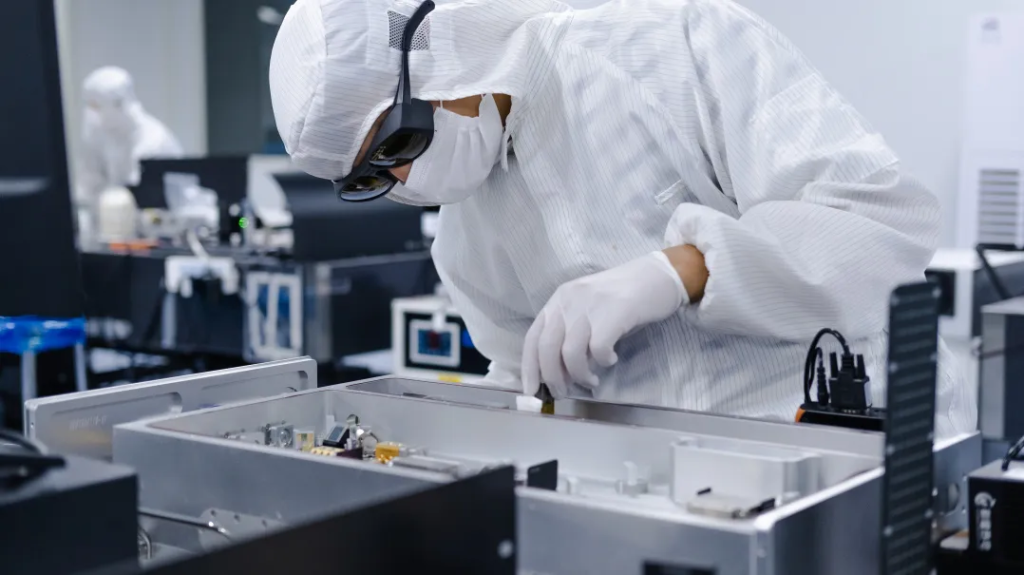
△ Huachuang Hongdu Solid Laser Frames in Tuning
⑤ Protection against environmental interference design
For various harsh operating conditions, the mirror frame adjustment thread pairs and rotating parts are sealed and dust-proofed, preventing dust and moisture ingress, thereby avoiding component wear and corrosion;The matrix surface adopts passivation, anodizing, and other anti-corrosion treatment processes to enhance overall corrosion resistance;For high-power lasers, the mirror mount can integrate micro-heat dissipation channels or heat sink structures , the auxiliary optical elements dissipate heat, further reducing the risk of thermal deformation.
① Reliability testing verification
In order to fully verify the reliability performance of the mirror frame, rigorous environmental tests of multiple dimensions are required:
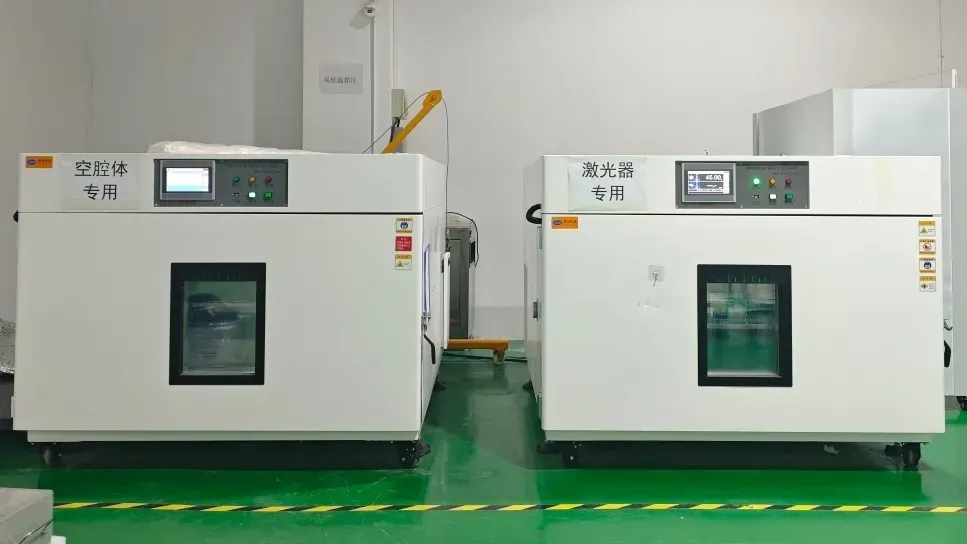
△ Huachuang Hongdu Laser Mirror Shelf High-Temperature Testing
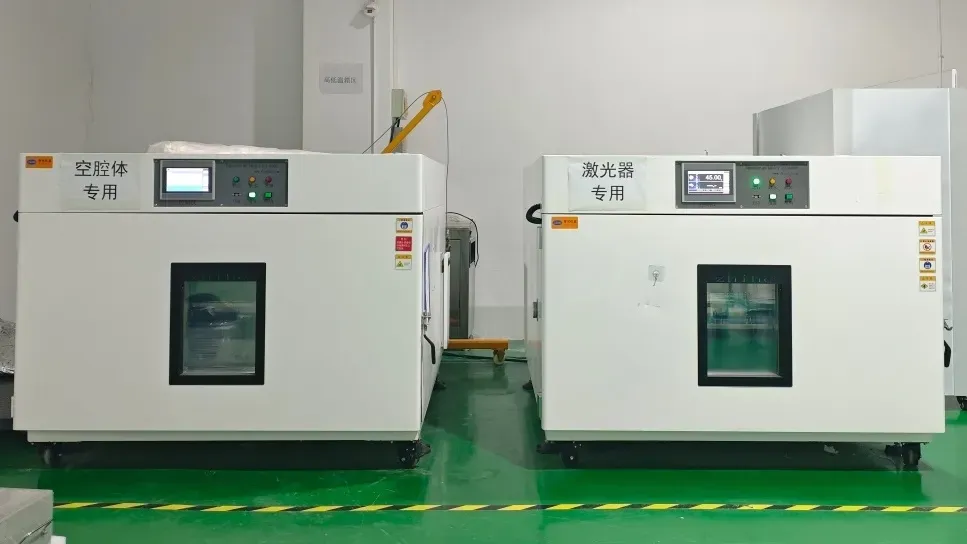
△ In a Long-lasting Aging Test of a Huachuang Hongdu Laser
② Typical engineering application scenarios
After equipping the high-power solid-state laser cutting machine with a high-reliability mirror frame, the laser can achieve continuous operation for 24 hours , with beam pointing stability improved by 80% , without power attenuation or mode distortion .
Aimed at large-scale industrial laser processing lines , addressing long-duration continuous operation,Many equipment vibration interference, ambient temperature fluctuations and other harsh and complex work conditions, high-reliability mirror racks can maintain the beam direction and focus accuracy for a long time, effectively reduce the frequency of light path calibration, reduce downtime maintenance time, and significantly improve the stability of production line operation and machining accuracy.And when applied to research-grade ultrafast solid-state lasers , the mirror frame’s excellent high-precision positioning performance can stably constrain the output of pulsed beams, providing reliable optical path support for various ultra-high precision experiments.
The highly reliable, long-cycle operation of the ultrafast solid laser is highly dependent on the ultra-precise positioning and long-lasting positioning capabilities of the mirror frame. Heat-induced drift, micro-vibration inaccuracy, structural defects, and grip damage are the core triggers for the failure of the mirror frame. The systematic optimization of low thermally sensitive material matching, high rigid integrated structure, non-worming precision regulation, flexible non-destructive gripping, etc. can solve the root cause of mirror failure and greatly improve the optical path stability and laser service life.
Trailer for the series
This article is the second in a series of mechanical plates called “high reliability,” digging deep into the core difficulties and optimization solutions for the reliability of mirrors inside the solid laser cavity. In the future, we will interchangeably interpret optical and electrical control related content and gradually build a complete technology system for high-reliability lasers. Please continue to pay attention.