

Integrators rarely lose a tool program because one more watt appeared on a competitor’s datasheet. They lose it when the laser that “won” the optical bake-off arrives after mechanical freeze—or when customization that looked generous on a wish list never made it into a shippable configuration.
“We shortlisted two ultrafast source vendors for a glass and polymer micromachining cell. Vendor A won the first technical vote: every option on the wish list—exotic packaging, deep firmware forks, and a pulse menu wider than our process recipe needed. Quoted optical specs were acceptable; promised ship date assumed ‘standard configuration.’ Midway through mechanical design freeze, the custom I/O and burst envelope slipped past the motion-controller bring-up window. We had a stronger datasheet and a late laser. We re-scored the RFQ with three equal weights: confirmed pulse/energy/M²/RMS bands, customization limited to interfaces we would actually wire (GATE/TRIG/PSO, burst where the recipe needs it, mechanical fit), and a lead-time breakdown we could put on the Gantt—engineering confirm, build/burn-in, docs. The second source looked less ‘complete’ on paper and kept the tool ship date. For integrators, an over-customized promise is often a schedule failure wearing a technical badge.” — Equipment integrator program manager, ultrafast micromachining tool BOM freeze
That scene is why lead time and customization belong on the same scorecard as pulse duration and average power. For equipment builders who buy a laser source—not a competing turnkey machine—supplier selection is a three-axis decision: process-fit specs, integrable customization, and calendar truth.
Lead time and customization affect ultrafast laser supplier selection for integrators because they decide whether a source can enter the tool BOM on a real Gantt chart. Rank vendors on confirmed optical bands and on a written customization scope (control interfaces, burst, mechanics) plus a phased delivery plan—engineering confirmation, configuration/burn-in, documentation. Unlimited customization with a vague ship date usually costs more than a narrower, schedulable configuration that matches the interfaces you will actually wire.
Ultrafast lasers are more accessible than a decade ago. Picosecond and femtosecond sources show up in glass via cells, polymer texturing, ceramic drills, and PV scribing tools. Motion vendors advertise position-synchronized output (PSO) and fixed-distance triggering so pulse overlap stays clean through acceleration and corners. Process reviews talk about burst packets, heat-affected zone (HAZ), and GHz-class recipes.
None of that helps if the source chassis, cable set, or trigger behavior is still “to be confirmed” when the stage vendor ships. Integrators sit between optical physics, motion control, and customer FAT dates. Lead time and customization are where applications wish lists, procurement price pressure, and program-management calendars collide.
Laserion supplies industrial ultrafast sources for mid-market applications and partners with integrators and agents. We do not sell a competing turnkey micromachining cell. RFQs should expect customization inside published series bands—not a redesign of your entire tool under our brand.

Even for a laser source, lead time has phases: quoting and engineering review; configuration readiness; build, alignment, and burn-in; documentation and ship prep. A single calendar date without those phases is hard to manage on a multi-vendor Gantt.
Ask what is frozen at order entry, what is NRE, and what slips if you change the burst table after kickoff. Compressing review and burn-in to hit a fantasy date usually transfers risk into first-article yield.
If your tool FAT is already booked, lock the interface list and power class against the laser envelope drawing now. Changing GATE/TRIG behavior after the motion controller is programmed usually costs a second integration loop.
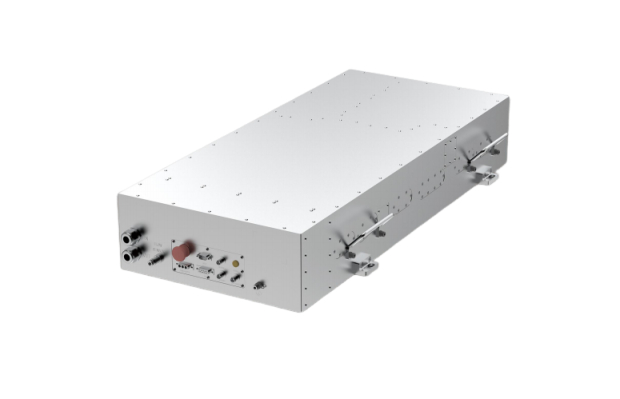
High-value customization for integrator cells is concrete: GATE / TRIG / PSO; Burst Mode only when the recipe uses it; mechanical/optical packaging that fits the existing train; series-band options (IR fs, IR ps, green ps, UV ps) rather than science-project forks.
| Customization style | What it optimizes | Typical integrator failure |
|---|---|---|
| Wish-list maximalism | Political comfort at kickoff | Ship date slips; unique spares |
| Interface-minimalism (no sync) | Fastest “standard” quote | Corner HAZ; late control redesign |
| Process-scoped configuration | Schedulable fit to recipe + motion | Fewer surprises at bring-up and FAT |
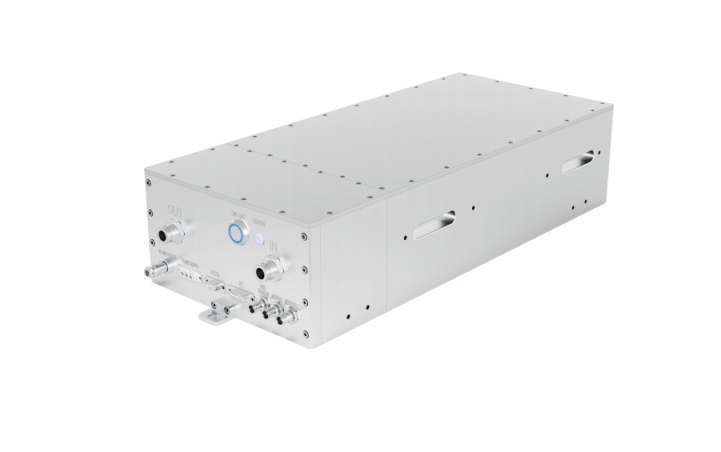
Pulse duration, energy, M², and RMS choose the process family. They do not, alone, choose the supplier. Weight three blocks: process-fit specs; integrable customization in writing; calendar truth (phased lead time and change rules). Price-only bake-offs often lose the delta to clarification days, expedite fees, and backup RFQs.
If you own process IP, galvos, and stages, buy a pure laser source and score delivery plus interfaces. If you need a complete cell, buy a tool OEM—and still write a source dual-source clause.
| Integrator station need | Customization / delivery focus | Laserion series | Specs that matter on the RFQ |
|---|---|---|---|
| Cold brittle / polymer / glass work with low HAZ | Energy headroom; stability; trigger integrity | Infrared femtosecond | 1030 nm; ≥50 W; ≥1 mJ; 500 fs–10 ps; M² ≤1.3; RMS <0.8% |
| Thick glass / high-energy percussion; scanner sync | PSO/GATE/TRIG in writing; modular service | Infrared picosecond | 1064 nm; >100 W (up to ~300 W class); ≥3.5 mJ; ~10 ps; M² <1.3; RMS ≤0.8%; PSO |
| Dielectric / PV-class opens needing temporal splitting | Burst table frozen at order | Green picosecond | 532 nm; ≥120 W; ~10 ps; M² <1.3; RMS ≤0.8%; programmable Burst Mode |
| Fine UV features on polymers, glass, semiconductors | Spot quality; clear UV path lead time | UV picosecond | 355 nm; ≥40 W; ~10 ps; M² <1.2; RMS ≤1% |
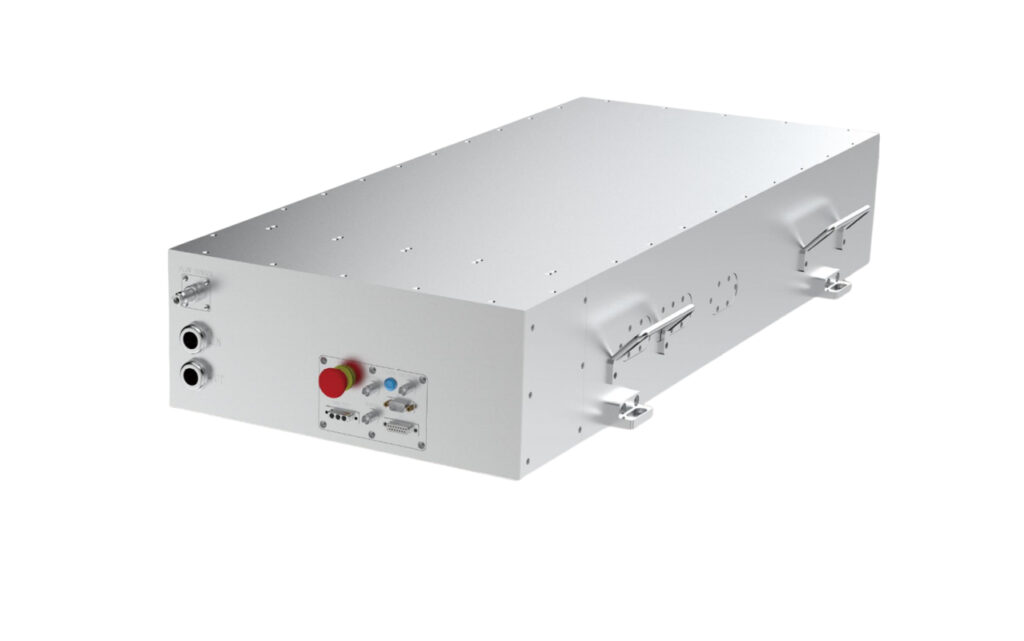
If the motion path has acceleration and corners, require PSO or fixed-distance firing in scope.
If the recipe never uses burst, do not buy burst as insurance.
If procurement is price-only, add clarification, dual-source, and FAT slip into the model.
If the customer wants a turnkey process guarantee, select a machine OEM—not a pure source supplier.
If the schedule is compressed, prefer a standard configuration inside a published series.
Write three artifacts before award: process recipe, interface list, and calendar (FAT / freeze / what may still change). Ask each shortlisted source OEM to answer those three—not only to restate peak power.
If you’re qualifying an ultrafast source for production or integrating one into OEM equipment, talking to an applications team directly can surface stability, customization, and delivery details no product listing will tell you.
Talk to our applications team →
Lead time and customization are how optical promises become shippable tools. Supplier selection fails when calendar and scope are left for later.
For integrators, lead time and customization should share the scorecard with pulse specs—because a late or unscoped ultrafast source does not miss a parameter; it misses the tool ship date.
They decide whether a source can be designed-in on a real schedule. Optical fit still matters, but vendors should also submit a written customization scope and a phased delivery plan.
Engineering confirmation, configuration/build, burn-in or acceptance, and documentation/ship prep. Ask what is frozen at order entry and what triggers a change-order slip.
GATE, TRIG, PSO; burst only when the recipe needs it; and mechanical/optical packaging that fits the existing train.
No. Request it when the qualified recipe uses subpulse packets. Unused burst scope adds schedule and spare-parts complexity without process benefit.
Many cells fail at corners when the laser fires at fixed PRF while velocity changes. PSO (or equivalent) must be scoped at quote time—not discovered at bring-up.
Include clarification lag, expedite probability, dual-source readiness, and FAT slip risk.
Not necessarily. Pure source OEMs customize lasers and interfaces; tool OEMs customize cells. Matching supplier type to the work usually shortens the critical path.
Process-fit specs, integrable customization, and calendar truth. Fail any axis hard enough and the supplier should not win on the other two alone.