The cavity stability of solid lasers is one of the key indicators of their performance, directly affecting the quality, power stability and application reliability of the output beam. The stability of the laser cavity requires a comprehensive consideration of thermal, mechanical, optical and environmental factors.
I Key Influencing Factors
01 Cavity Stress
- Thermal deformation and thermal stress: When the laser operates, the optical cavity undergoes thermal deformation due to heat absorption, leading to beam path deviation or degradation of beam quality. The thermal expansion coefficients of different materials can also generate thermal stress, which may damage components.
- Residual stress: Under the thermal-mechanical coupling effects of machining, casting, welding, and other processes, uneven plastic deformation, temperature field changes, and phase transformation lead to internal stresses (also known as residual stresses) within the material. These stresses significantly affect the machining precision, fatigue strength, and service life of the cavity; during long-term slow release, the optical path will shift due to cavity deformation.
02 Environment and External Interference
- Chamber cleanliness: the degree of cleanliness of the chamber surface, particularly regarding the attachment of contaminants such as particles, oil residues, and organic residues。This is a key factor for laser performance, stability, and lifespan, as contaminants can affect beam quality, gas purity, or cause component damage.
- The sealing of the cavity: The sealing of the cavity includes structural sealing and cooling system sealing. If the cavity structure cannot achieve proper sealing, allowing external contaminants and moisture to enter the cavity, it will lead to issues such as optical lens contamination and crystal deliquescence, which in turn directly cause the laser to malfunction.
- External disturbances: The stable operation of lasers is easily affected by external disturbances such as vibration and temperature changes. When the temperature of the cavity is below the ambient dew point, it is easy to expose, and it needs to be prevented by thermal control or dehumidification systems to prevent water vapor condensation causing damage to the optical components.The rigidity of the cavity mechanical structure is insufficient, leading to vibration transmission, which causes movement and deformation of optical components within the cavity, thereby affecting the stable output of the laser.
II Design Optimization Schemes
01 Material Selection
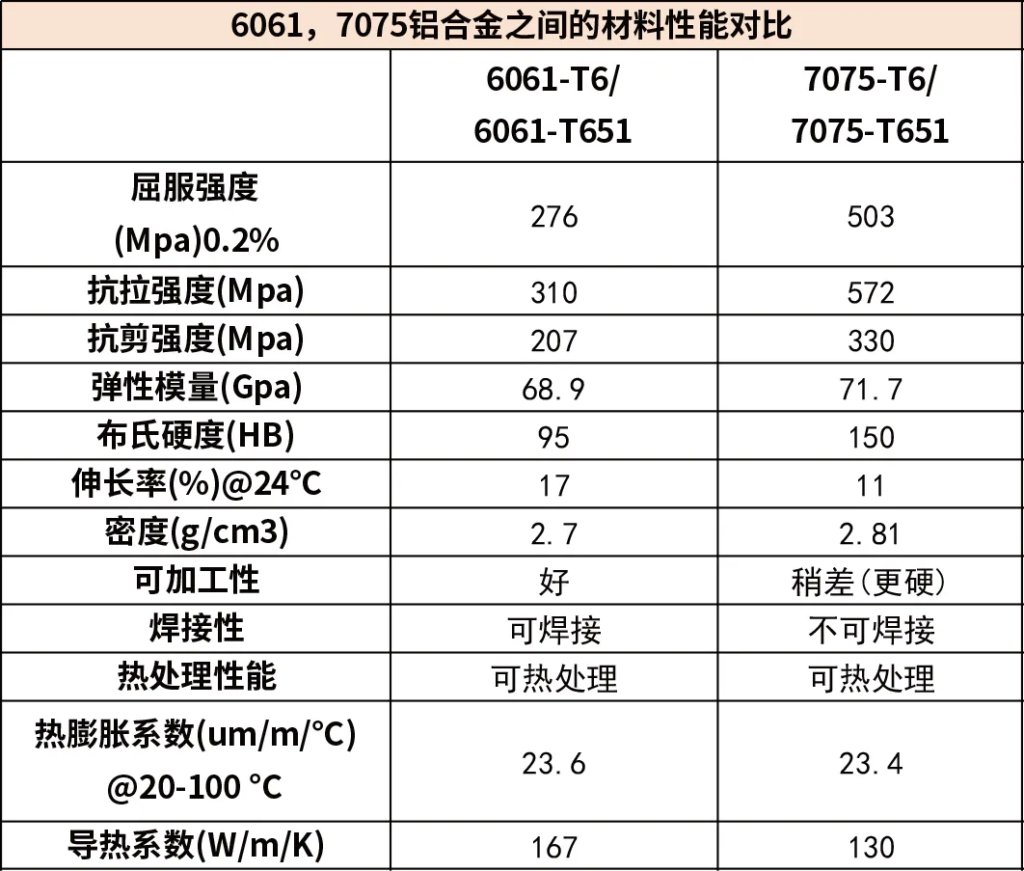
The cavity adopts a material with low thermal expansion coefficient (6061-T651 aluminum alloy) to reduce thermal deformation.
- 6061-T651 state aluminum plate on the basis of T6 increased pre-stretching treatment, effectively eliminating the internal stress, processing deformation tendency is smaller.
- High thermal conductivity (about 167 W/(m ∙ K)), can quickly disperse heat, reduce thermal deformation, ensure dimensional stability, maintain the accuracy of optical components.
- Tensile strength (about 240-300 MPa in T6 state) is sufficient to support conventional optical components, taking into account strength and cost.
- Easy to achieve high reflectivity by precision polishing or coating (such as 266nm band reflectivity > 90%), and simple alloy elements (Mg + Si), low light absorption.
△ Contrasting Material Properties Between 6061 and 7075 Aluminium Alloys
02 Stress Elimination
- The raw material undergoes natural and artificial aging as well as vibration treatment to eliminate some internal stresses。 Using high-precision, high-stability machine tools and advanced processing technologies to pre-machine the cavity reduces the remaining allowances of each part, minimizes deformation in subsequent processes, and after pre-processing, heat treatment and static aging are applied to release some mechanical stress.
- Using the difference in the thermal expansion coefficient of the material, the cavity is subjected to multiple high-temperature cycle treatments. This process causes the internal thermal and external stresses of the metal material to deformation, thereby improving its mechanical properties, stability and service life.
03 Structural Design
Mechanical structure design
- The use of a one-cavity design solution, with no splicing or forming surfaces in the cavity, can significantly improve the mechanical structural rigidity of the cavities and help to resist external interference such as vibration and temperature change. Due to the absence of seams, the formed surface is smooth and continuous, which is conducive to obtaining high-quality product surfaces and reducing the need for subsequent treatment; The overall structural design avoids leakage or wear problems that might occur at the joint, significantly improving the sealing and durability of the cavity.
- The optical-electromechanical design solution is adopted to reduce redundant components and reduce heat capacity. The internal structure of the cavity is divided into different functional areas, reducing the electromagnetic and optical stray light interference present in each functional area, and improving system integration and maintainability.
- Add a damping device at the base of the cavity to isolate the external vibration and avoid the concentrated stress when the cavity is fixed.
Cooling System Design
- By simulating and analyzing the thermal field distribution, and combining it with experimental verification, optimize the heat conduction path , reduce localized overheating, and ensure that the heat dissipation scheme is compatible with the overall structure of the laser。 By designing water-cooling channels within the side walls of the cavity, external cooling media are introduced to rapidly conduct heat away from the optical cavity while simultaneously isolating the external environment from affecting the temperature of the optical cavity, thereby ensuring the stability of the laser’s operating environment.
- The key heat sources (such as the amplified crystal, laser collector, and LD pump source) are thermally isolated from the main cavity to reduce the impact of heat conduction on the stability of the optical path。 The crystal module heat dissipation substrate is made of high thermal conductivity materials, and micro-machining technology is applied to process micron-sized channels on its surface. Through forced convection heat transfer using high-speed cooling fluid (deionized water), heat is carried away. Microchannel cooling can achieve a heat transfer coefficient of up to 10,000 W/㎡·K, which is more than 10 times that of traditional water cooling.
04 Environmental adaptability
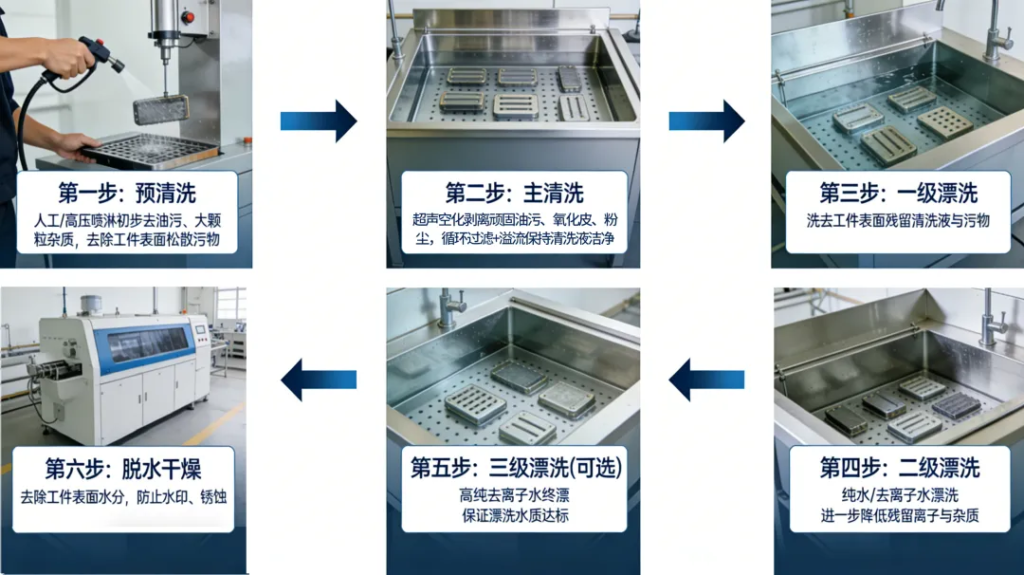
- Effective cleaning: The cavity is cleaned using a professional cleaning process to ensure the surface cleanliness meets optical-grade requirements while avoiding corrosion or damage to the cavity surface.
- Cleaning and Inspection: Before putting the chamber into use, it must be cleaned in a dust-free environment, Using vacuum equipment to clean the cavity, while simultaneously detecting surface cleanliness, particle count, residual ions and surface roughness as key parameters to ensure cavity cleanliness meets requirements.
△ Cleaning and Inspection Steps
The stability of the laser cavity is a key factor in the stable performance of lasers, and during actual operation, it is necessary to conduct a comprehensive evaluation across multiple dimensions such as thermal management, structural strength, machinability, economics, and optical performance. The above design methods and operating processes are still being continuously refined and iterated, aiming to constantly improve product quality and stability.
Trailer for the series
This article begins the High Reliability series on mechanical reliability. In the future, we will continue to extend and in-depth analyze key technical difficulties such as accurate regulation of the electric control system. Stay tuned.