The loudest number on an ultrafast datasheet is often the least useful one in production.
“The shortlist was sorted by peak power. The highest-peak femtosecond option looked safest for alumina dicing, so it won the first RFQ. At volume, ±1 µm feature control and HAZ under 10 µm were already held by a 10 ps-class industrial picosecond source; the extra peak power did not raise yield, but it did raise CapEx and optics cost. Over an eight-week dual-source trial we scored vendors on M² ≤1.3, RMS power stability under 1%, and spare lead time instead. The ranking flipped. Peak power was the loudest cell on the datasheet and the weakest predictor of shipped-part quality.” — process engineer, alumina ceramic dicing line dual-source qualification
If you need to compare industrial ultrafast laser suppliers beyond peak power, that scene is the whole argument in miniature. Peak power sells the brochure. Process fit, multi-shift stability, swap readiness, and channel boundaries decide whether your machine ships on schedule.
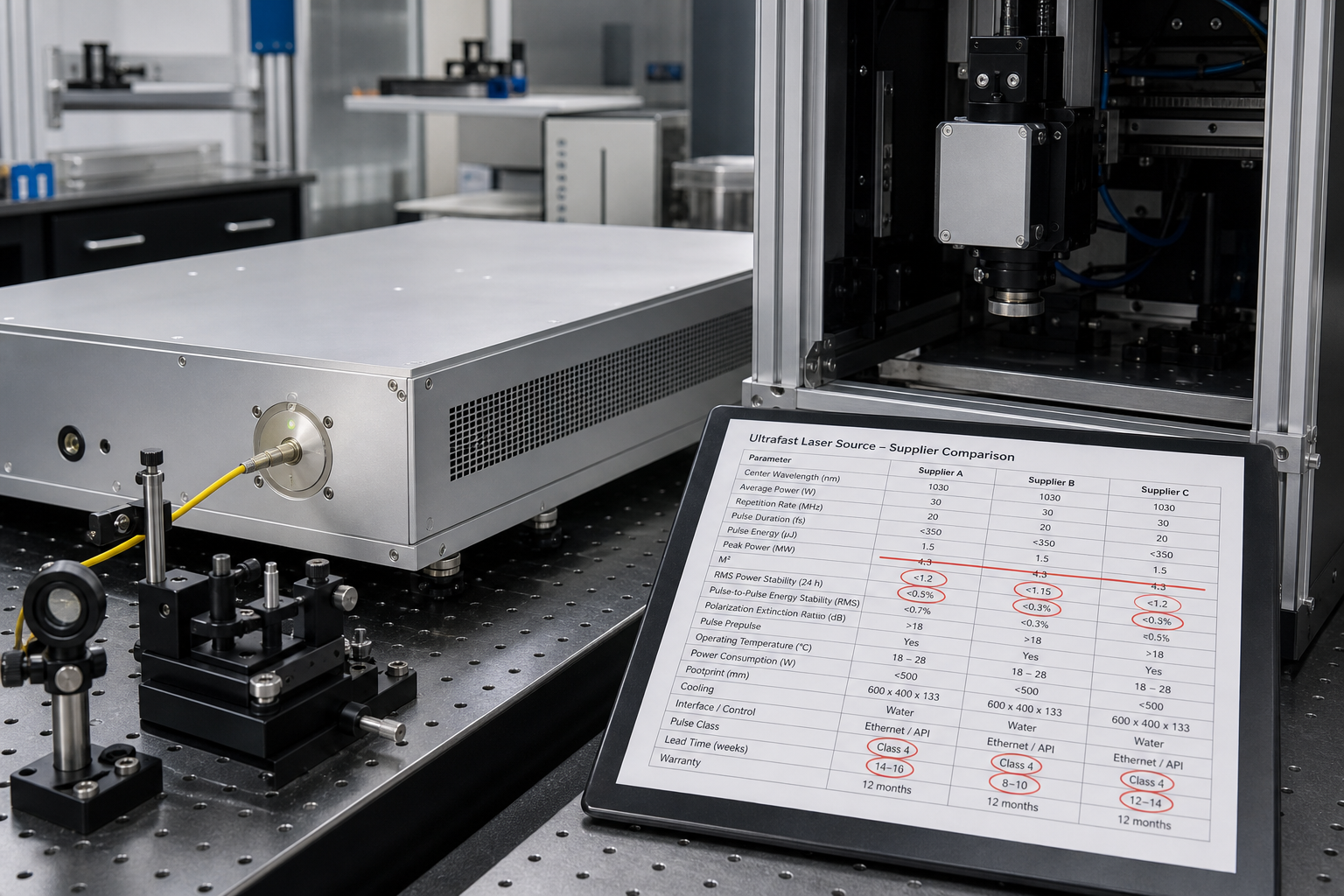
Rank suppliers first on pulse-class and wavelength fit to your part, then on industrial envelopes (M², RMS power stability, spare lead time), then on dual-source feasibility and whether the vendor also sells finished cells into your accounts. Use peak power only as a secondary check that the source clears your ablation threshold — not as the primary weight in the scorecard.
Search traffic for an ultrafast laser supplier scorecard for equipment integrators rises for a practical reason: catalogs now span kilowatt amplifiers, air-cooled oscillators, UV converters, and niche research boxes, while CapEx meetings still collapse the decision to one cell — peak power. We see the same pattern in alumina dicing, PCB/FPC depaneling, and glass or sapphire scribing qualifications. Engineering wants a source that holds the drawing. Procurement wants a clean matrix. Sales wants the “safer” premium pulse.
Peak power is attractive because it looks comparable across vendors. It is also misleading because two sources with similar peak figures can diverge on beam quality, multi-shift drift, pulse class, delivery, and go-to-market conflict. HAZ — the heat-affected zone around a cut or drill — is set by pulse–material interaction and process control, not by who printed the larger peak-power claim. Once your tolerance band is already met, buying more peak often buys only CapEx and optical complexity.
This article lays out six evaluation dimensions you can paste into an RFQ. Peak power stays on the sheet. It just stops running the meeting.
Start with the part drawing, not the amplifier brochure. Lock feature tolerance, HAZ budget, throughput (parts/hour), and material stack. Then map pulse class: nanosecond for tolerant marking and cutting; industrial picosecond as the workhorse for many PCB, glass, ceramic, and metal micromachining windows; femtosecond when cold ablation is genuinely non-negotiable on heat-sensitive stacks.
In the alumina case above, ±1 µm and HAZ under 10 µm were already reachable in a 10 ps-class regime. Ranking vendors by peak power selected the wrong optimization variable. A practical industrial picosecond laser qualification criteria list begins with “does this pulse class clear the drawing?” — not “who claims the highest peak?”
Common mistake: treating shorter pulse width as automatically better for every production coupon. Shorter is not free; it often costs optics, dispersion management, and CapEx without moving SPC.
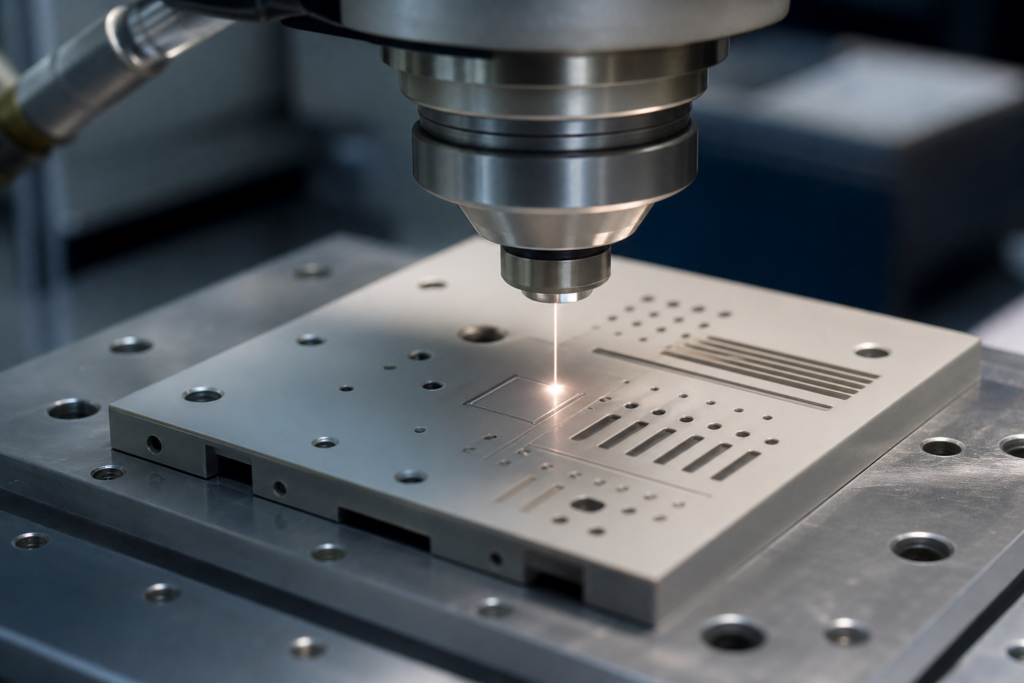
Ask what the source does over a shift, not in a lab demo cut. Two specs belong near the top of any mid-market RFQ: beam quality (M², typically ≤1.2–1.3 for fine-feature industrial sources) and RMS average-power stability (often targeted under 1% for multi-shift duty). M² describes how tightly the beam can be focused; drift in power or pointing shows up as scrap your customer will blame on your machine.
If your next sample run is already booked, confirming pulse class, M², and stability against the part drawing now saves a second qualification loop later — before you freeze a peak-power-weighted PO.

Peak-power sorting fails again when finance opens the landed-cost model.
“We built a supplier matrix with peak power as the primary weight. Vendor A won on paper. Nine months of landed-cost tracking on a PCB/FPC depaneling platform showed the opposite: cost-per-part and requalification days mattered more than brochure peak. The source that cleared ±3 µm with 20–100 W-class average power and multi-shift stability modeled payback under 10 months; the peak-power leader pushed modeled payback past 14 months once optics, downtime, and single-thread spares were included. Procurement’s scorecard changed to pulse-class fit, dual-source feasibility, and spare lead time. Peak power stayed on the sheet — as a secondary check, not the ranking key.” — procurement lead, PCB/FPC depaneling ultrafast source supplier scorecard redesign
Weight cost-per-part, requalification days after a drawing change, spare lead time, and dual-source options. Keep peak power as a go/no-go against ablation threshold — not as 40% of the score.

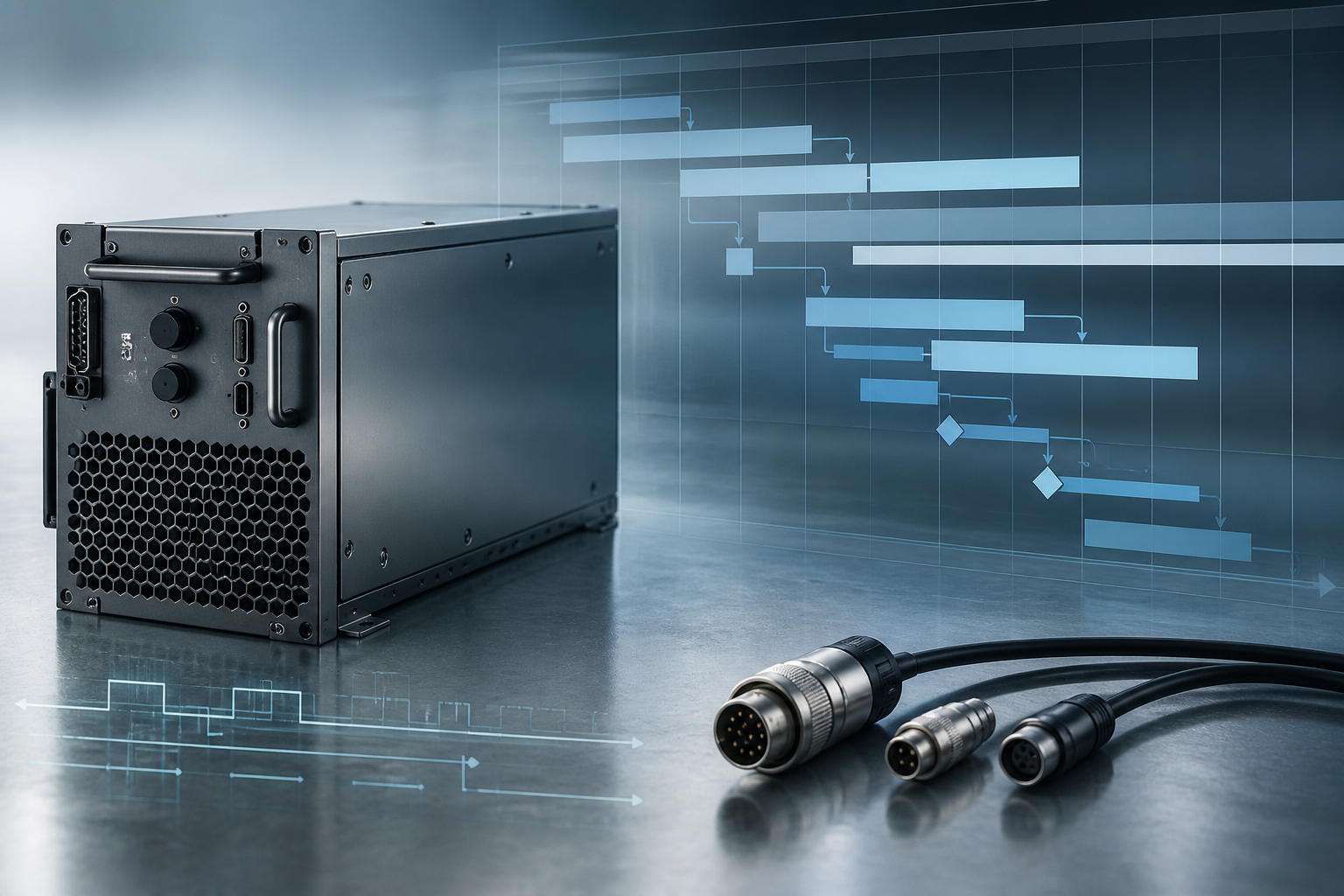
A supplier that cannot be replaced inside your optical train without redesigning the cell is a schedule risk, not a strategic partner. Ask: Can a second source in the same pulse class drop in with a documented alignment procedure? What is spare lead time under multi-shift duty? Who owns the interfaces — fiber delivery, chillers, gating, software triggers?
Before/after in one line: before, the RFQ asked only for peak power and average watts; after, dual-source feasibility and swap time ranked above vanity peak figures.

This dimension rarely appears on datasheets — and it decides accounts.
“Two amplifiers posted nearly identical peak-power figures, so the datasheet comparison looked like a coin flip. The difference showed up after FAT: one source held RMS power stability under 1% across multi-shift duty with M² ≤1.3; the other drifted enough to force weekly process tweaks. Separately, the higher-peak vendor also sold complete cells into our region and undercut an account we had already qualified. We standardized on a pure laser source partner, dual-sourced the same pulse class, and rewrote the RFQ to ask for stability envelopes, swap procedures, and channel boundaries before peak power. The variable that decided the supplier was not who claimed the biggest peak — it was who could stay a subsystem inside our machine.” — R&D lead, glass/sapphire scribing OEM supplier architecture review
Ask explicitly: Do you sell finished micromachining cells into our territory? Laserion’s positioning as a pure source OEM exists for this reason — mid-sized integrators need a laser partner who does not compete for the same finished-machine PO.
A supplier who only wins on one IR peak-power SKU may force you into a second vendor when the next program needs green or UV picosecond, or a different pulse class. Full-matrix coverage — IR/green/UV, nanosecond through femtosecond — reduces requalification friction across medical, semiconductor/display, and precision metal platforms. Judge the catalog as a roadmap, not a single hero wattage.
| Evaluation weight | Weak scorecard (peak-first) | Strong scorecard (production-first) |
|---|---|---|
| Primary sort | Peak power | Pulse class + wavelength fit to drawing |
| Stability | Often missing | M², RMS power stability, multi-shift evidence |
| Commercial | Lowest quote / brand name | Dual-source path, spare lead time, payback |
| Channel | Ignored | Pure source vs machine-OEM conflict |
| Peak power role | Ranking key | Secondary threshold check |
If your drawing already clears with an industrial picosecond window and you sell motion plus process software, do not rank suppliers by peak power — rank by process fit, stability envelopes, dual-source readiness, and channel boundaries. If you are standing up cold ablation on a heat-sensitive stack where HAZ is the binding constraint, keep femtosecond on the table, but still score stability and swap path before peak.
If two datasheets show similar peak figures, treat that as a tie on vanity and escalate the real tests: multi-shift drift, spare lead time, and whether the vendor sells cells beside you. If procurement’s matrix still weights peak power above 20%, rewrite the matrix before you issue the PO — that weight almost always selects over-spec.
Confirm the next drawing revision’s tolerance and HAZ budget, not only the pilot coupon. Confirm IR vs green vs UV for the material stack. Confirm M² and RMS stability under production-like duty. Confirm dual-source swap time. Confirm whether the supplier sells finished machines into your accounts. Leave peak power as a threshold check, not the headline rank.
If you’re qualifying an ultrafast source for production or integrating one into OEM equipment, talking to an applications team directly can surface stability, customization, and delivery details no product listing will tell you.
Talk to our applications team →
The alumina line did not fail because peak power is fake physics. It failed because a production scorecard treated a brochure cell as a process variable. Industrial ultrafast suppliers should be compared the way you compare any critical subsystem: fit to the drawing, behavior over a shift, replaceability, and commercial boundaries.
Peak power belongs on the datasheet; it should not run the supplier ranking.
How do you compare industrial ultrafast laser suppliers beyond peak power?
Score process fit (pulse class and wavelength to the drawing), multi-shift stability (M², RMS power stability), dual-source swap readiness, spare lead time, payback, and channel conflict first. Use peak power only to confirm the source clears your ablation threshold. That order flips most peak-power-sorted shortlists.
Why is datasheet peak power a weak ranking metric?
Because once feature tolerance and HAZ are already met, extra peak often adds CapEx and optics cost without raising yield. Two sources with similar peak figures can still diverge on beam quality, drift, delivery, and whether the vendor competes with your finished machines.
What belongs on an industrial picosecond laser qualification checklist?
Pulse duration class, wavelength, average power band, M², RMS power stability, cooling and control interfaces, multi-shift duty evidence, spare lead time, documented dual-source alignment, and your process metrics — tolerance, HAZ budget, parts/hour. Peak power is a secondary check, not the title row.
How should procurement weight an ultrafast laser supplier scorecard?
Put the largest weights on cost-per-part, requalification days, dual-source feasibility, and spare lead time. Cap peak-power weight so it cannot override process fit. In one PCB/FPC landed-cost review, a production-fit source modeled payback under 10 months versus past 14 months for the peak-power leader.
What is the difference between a pure laser source manufacturer and a machine OEM?
A pure source manufacturer sells the laser subsystem and partners with integrators. A machine OEM may also sell complete cells into the same accounts. Datasheets rarely disclose that conflict — your RFQ must ask it explicitly.
Do you need the highest peak-power femtosecond source for alumina or PCB micromachining?
Not necessarily. Many production windows hold micron-class tolerances and low HAZ with industrial picosecond sources. Femtosecond earns its place when cold ablation is non-negotiable. Over-ranking peak power often selects over-spec.
What should a dual-source ultrafast laser RFQ include?
Same pulse class and wavelength band, interface drawings, alignment procedure, acceptance metrics (M², stability), spare kit list, and maximum swap time. If a vendor cannot support a second-source path, treat that as a schedule risk in the scorecard.
How important is multi-shift stability compared with peak power?
For OEM platforms, stability often matters more. Drift in power or pointing creates scrap and field service your customer attributes to your machine. Ask for envelopes under production-like load, not only a single demo cut that maximizes peak appearance.