In the world of advanced manufacturing, the pursuit of perfection can be a fatal distraction. We’ve seen teams spend months developing a process that produces a single, flawless part, only to realize that producing a million of them is economically impossible. This is the chasm between the lab and the production floor, a gap where countless promising projects have quietly expired.
Consider the challenge of cutting copper foil for electric vehicle (EV) battery tabs. A team I know prototyped their process with a low-power femtosecond laser. The results, viewed under a microscope, were breathtaking: perfectly clean edges, zero burrs, and a heat-affected zone (HAZ) under 3 micrometers. It was a technical masterpiece, the kind of result that makes for a beautiful lab report.
“Then we calculated the cycle time for a million parts. The project was dead on arrival. The winning solution was a 50W, 532nm picosecond laser. It pushed the cutting speed from 0.2 m/min to over 1.5 m/min. The HAZ slightly increased to 5µm, which was still well within our manufacturing tolerance. We fixated on achieving the absolute minimum thermal effect, when the actual engineering problem was delivering ‘good-enough’ quality at 7x the throughput. For industrial scale, power dictates feasibility.”
— Senior Process Engineer, EV battery tab cutting line validation
This engineer’s story cuts to the core of industrial laser processing. It reveals a fundamental truth: the “best” laser isn’t the one that achieves the most pristine result in a lab; it’s the one that solves the complete engineering problem, which always includes throughput, cost, and yield. This guide is for engineers who live by that truth.
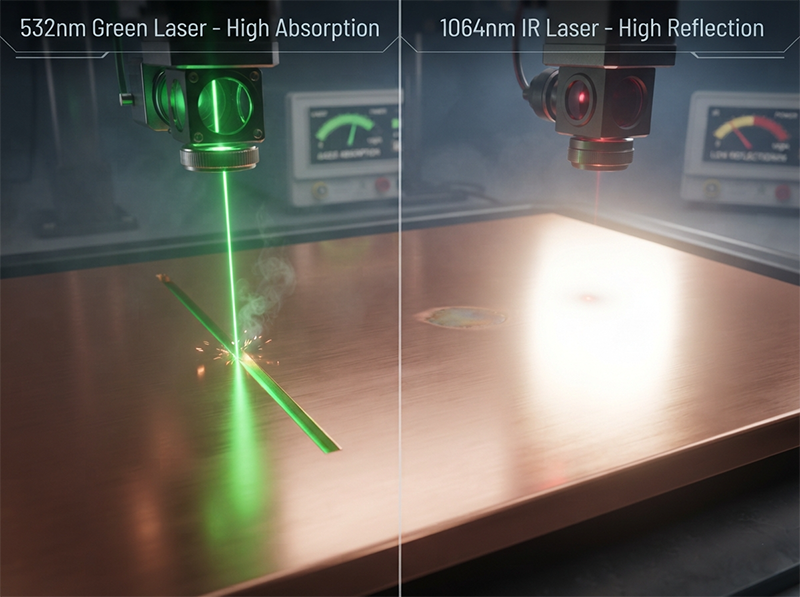
For materials processing, 532nm picosecond lasers offer a strategic balance of high absorption in critical materials (like copper and gold), minimal thermal damage, and the high average power required for industrial-scale throughput. Unlike UV or IR lasers, the 532nm wavelength (green light) is uniquely effective for processing highly reflective metals. The picosecond pulse duration ensures clean ablation with a minimal heat-affected zone (HAZ), while modern architectures allow for power scaling that makes high-volume manufacturing economically viable.
If you’re an engineer tasked with developing or scaling a laser process, you are constantly navigating a complex web of trade-offs. The pressure is on to process new materials—from the copper in EV batteries and the polymers in medical devices to the glass in 5G components—faster, cheaper, and more reliably than ever before. Choosing the right laser source is the most critical decision you will make.
However, navigating vendor datasheets can feel like comparing apples to oranges. One spec sheet boasts peak pulse energy, another highlights beam quality, and a third emphasizes wall-plug efficiency. Which parameter actually matters for your application?
Having worked with hundreds of engineering teams to integrate laser systems, we’ve learned that successful projects are built on a clear understanding of three core parameters that go beyond the datasheet headlines: raw throughput, long-term stability, and effective precision. This guide will walk you through each, providing a framework to help you select the right 532nm picosecond laser for your specific manufacturing challenge.
As the Senior Process Engineer’s story illustrates, the first question for any industrial process is not “Can it be done?” but “Can it be done at speed and scale?” For many applications, particularly the processing of metals like copper, gold, and nickel, average power is the single most important parameter determining economic viability.
The physics are straightforward:
This is why the team cutting copper foil saw a 7x increase in cutting speed when moving from a low-power “perfect” source to a high-power 532nm picosecond laser. The slight increase in the heat-affected zone was a perfectly acceptable trade-off for a monumental gain in throughput.
| Parameter | Femtosecond (Low Power) | 532nm Picosecond (High Power) | Industrial Implication |
|---|---|---|---|
| Typical Power | 1W – 20W | 30W – 100W+ | Enables high-volume manufacturing (HVM). |
| HAZ | Extremely low (<3µm) | Very low (<5-10µm) | Picosecond HAZ is sufficient for most industrial needs. |
| Process Speed | Low (Lab/R&D scale) | High (Production scale) | Directly impacts Cost Per Part and UPH (Units Per Hour). |
| Best Fit | Prototyping, scientific research | Industrial production, scaling | Matches the tool to the job: R&D vs. Manufacturing. |
If your production targets are measured in thousands or millions of units per year, your primary focus should be on the scalable average power of your laser source.
Once a process is running at speed, the next challenge is keeping it running consistently, 24/7, for months or even years. This is where the often-overlooked specification of long-term power stability becomes the most important parameter on the datasheet.
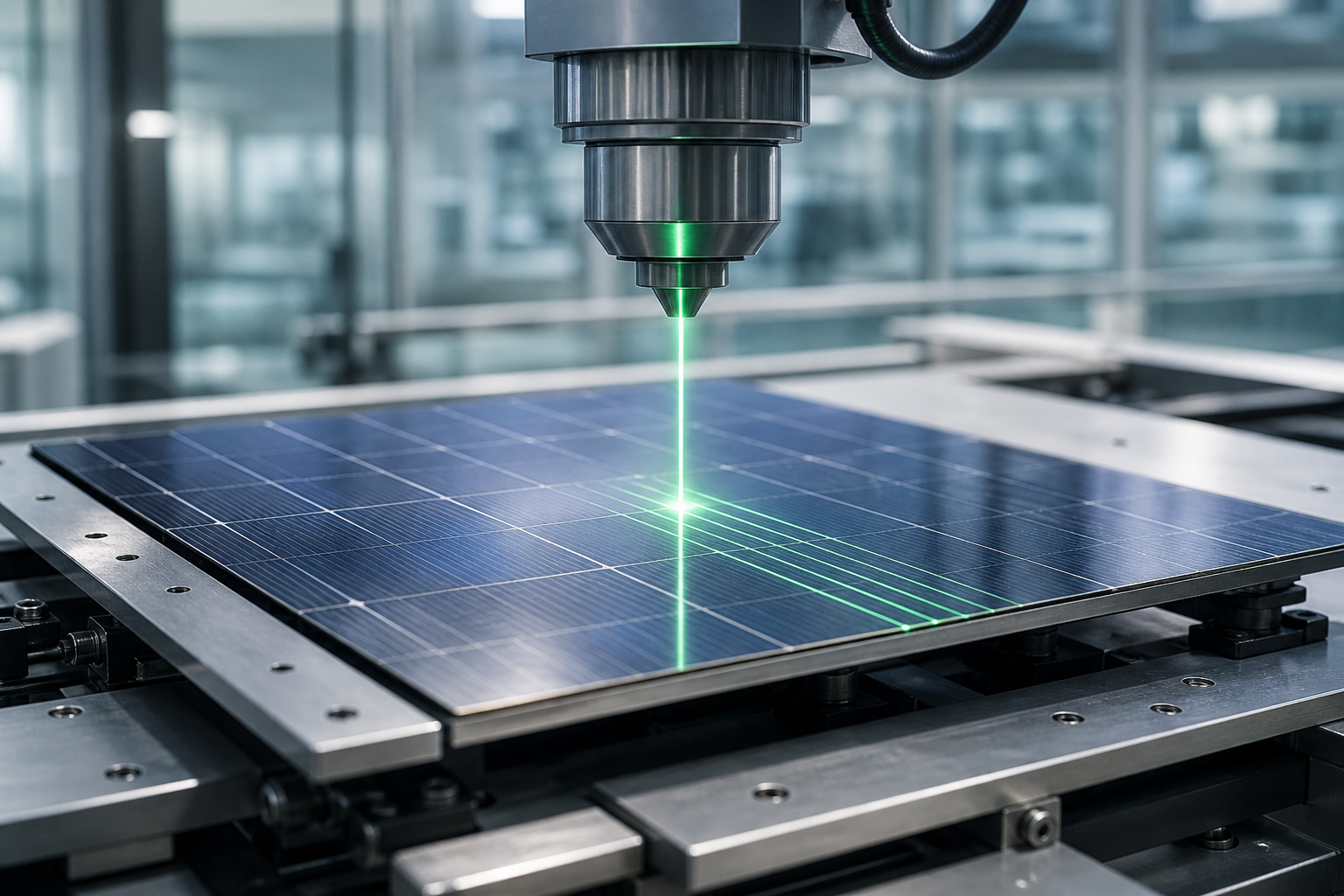
An R&D lead qualifying sources for a next-gen solar cell scribing application shared a critical insight. On paper, two 50W, 532nm picosecond lasers looked identical. But after 2000 hours of continuous operation, one source showed an 8% power drop and increased pulse-to-pulse instability. This tiny drift was enough to cause inconsistent scribe lines and trigger a 2% yield drop. The other source, built for stability, held its power to within 2% deviation over 8,000 hours of testing.
In high-volume manufacturing, yield is everything. An unmanaged 2% yield drop can wipe out the entire profit margin for a product. The spec that truly matters is not the peak power on day one, but the guaranteed power stability across the first year of operation. This stability is a function of the laser’s thermal management and optical design—it is not something that can be added later. Chasing these “ghost” yield excursions caused by drifting laser parameters is an engineer’s nightmare.
When evaluating a laser, ask for its long-term stability data over thousands of hours, not just its “out-of-the-box” spec.
While high power drives throughput, the ability to create ultra-fine features is governed by a different parameter: beam quality, quantified as M² (M-squared). M² is a measure of how tightly a laser beam can be focused. A perfect, “diffraction-limited” beam has an M² of 1. An industrial laser with an M² under 1.2 is considered excellent.
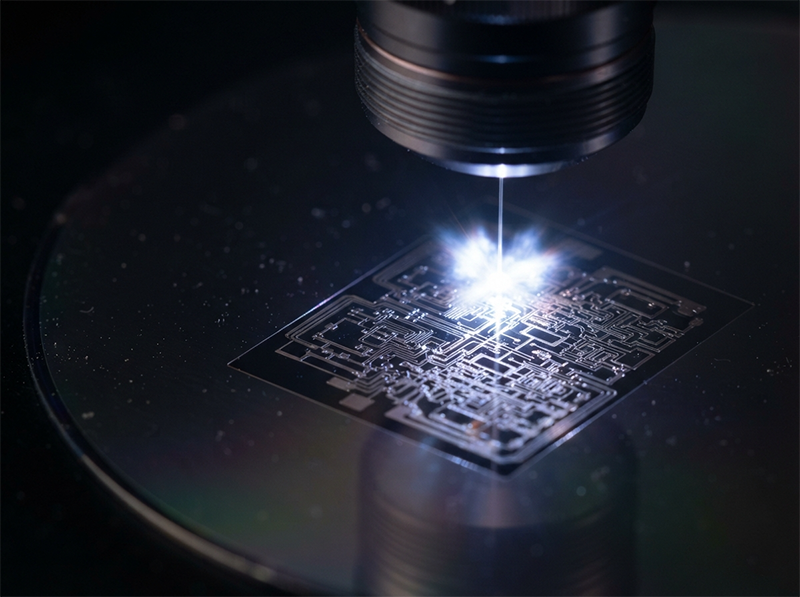
For applications like drilling 10µm micro-vias in glass or scribing fine patterns on a microfluidic chip, M² is not a “nice-to-have” spec; it is the primary enabler.
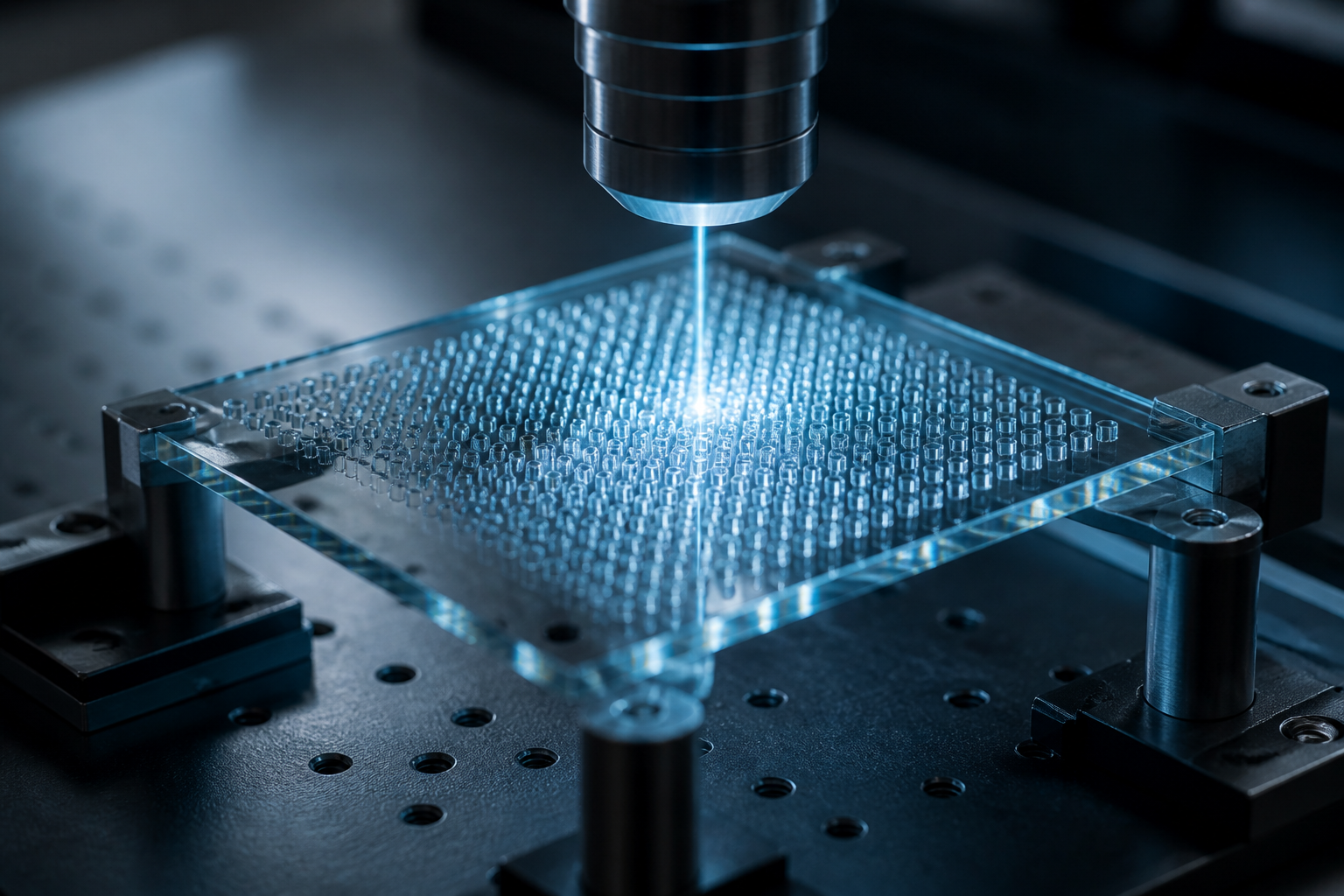
A systems integrator explained it perfectly. Their customer wanted to drill tiny holes in borosilicate glass and was fixated on pulse energy. The initial attempt with a high-energy but poor-beam-quality (M²=1.4) source was a disaster, resulting in inconsistent holes and micro-cracking. They were fighting the physics. Switching to a source with slightly lower energy but a pristine M² < 1.2 changed everything. The focused spot was clean and intense, allowing them to hit the 10µm target reliably with a wider, more forgiving process window.
This is because the effective energy density (the amount of power delivered to a specific area) is what matters for precision processing. A high-quality beam allows you to concentrate the laser’s energy into a smaller, cleaner spot, achieving the intensity needed for ablation without damaging the surrounding material.
Selecting the right 532nm picosecond laser is about matching the laser’s strengths to your primary application challenge. Here’s a simple framework:
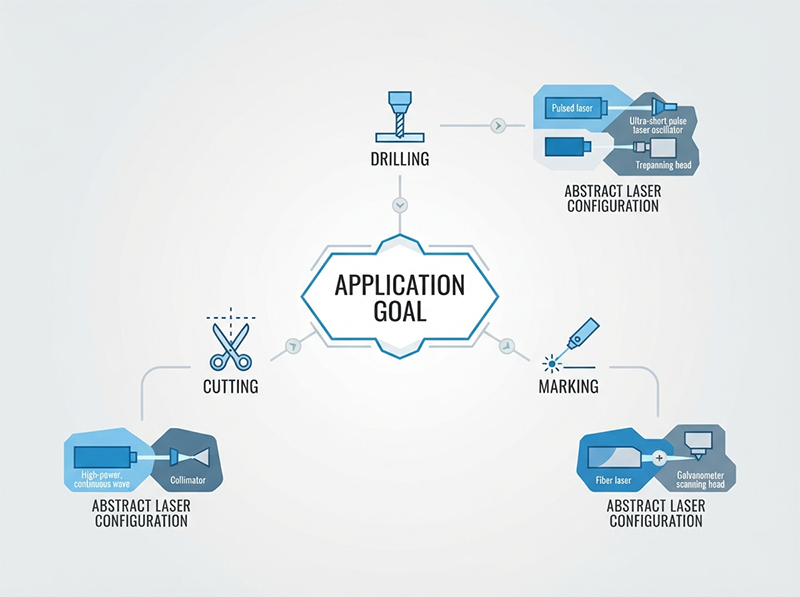
A datasheet provides a snapshot in time, under ideal conditions. A true industrial laser must perform reliably for years inside a machine on your factory floor. When you talk to vendors, push beyond the spec sheet. Ask for long-term stability data, application-specific processing results, and evidence of how their laser’s architecture is designed to manage thermal loads for 24/7 operation.
If you’re sourcing at scale, talking to a supplier directly can surface details no product listing will tell you.
We started with the tension between the perfect part and the profitable process. The journey from the lab to the factory floor is a journey of intelligent compromise and strategic optimization. The engineer who succeeds is the one who understands that the goal is not to eliminate the heat-affected zone, but to eliminate the economic and logistical barriers to production.
The most effective 532nm picosecond laser isn’t the one with the highest peak power or the shortest pulse, but the one whose performance parameters—power, stability, and beam quality—align perfectly with your business goals.
1. What materials are best suited for 532nm picosecond laser processing?
532nm lasers are exceptionally effective for materials that are highly reflective to the more common 1064nm infrared wavelength. This includes copper, gold, nickel, and certain thin-film polymers. They are also widely used for processing silicon, glass, and ceramics, offering a great balance of absorption and low thermal damage.
2. For industrial use, when should I choose a picosecond laser over a femtosecond laser?
Choose a picosecond laser when your primary drivers are throughput and cost-per-part, and your application can tolerate a minimal heat-affected zone (typically <10µm). Femtosecond lasers are best for R&D, prototyping, or niche applications requiring the absolute minimum thermal input, but their lower average power and higher cost often make them unfeasible for high-volume manufacturing.
3. Why is M² (beam quality) so important for micro-machining?
M² determines how tightly you can focus a laser beam. For micro-machining, creating features on the micron scale requires an extremely small and intense focused spot. A laser with poor M² (e.g., >1.3) will have a larger, less defined focal spot, spreading the energy out and failing to achieve the intensity needed for clean ablation. This results in larger features, more thermal damage, and an unstable process.
4. What is the Heat-Affected Zone (HAZ) and why does it matter?
The HAZ is the area of material next to the laser cut/weld that was not melted but whose properties were altered by the heat of the process. In many electronics and medical applications, a large HAZ is undesirable as it can compromise the material’s structural integrity or electrical properties. Picosecond lasers are valued for creating a very small HAZ.
5. How do pulse energy, repetition rate, and average power relate?
Average Power (W) is the product of Pulse Energy (J) and Repetition Rate (Hz). You can achieve the same average power with high energy at a low rep rate, or low energy at a high rep rate. For high-speed processing (scanning), a high repetition rate is often desirable, while for single-spot drilling, high pulse energy might be more critical.
6. I’m processing copper foil. What’s the most important parameter to look for?
For processing copper, the two most critical parameters are the wavelength (532nm is vastly superior to 1064nm due to higher absorption) and high average power. High power directly translates to faster cutting or welding speeds, which is essential for making the process economically viable in applications like EV battery manufacturing.