
Most engineers I talk to arrive at the femtosecond versus picosecond laser decision already leaning one way. Femtosecond feels like the safer bet: shorter pulse, smaller heat-affected zone, the premium option on paper. Then the line moves from sampling to production volume, and the arithmetic quietly turns against that assumption.
“The line was specified around femtosecond — shortest pulse, smallest heat-affected zone, the defensible ‘premium’ call for alumina ceramic dicing. Then it hit production volume. At 50W, throughput capped near half the line target and cost-per-part climbed every shift. Moving to a 100W picosecond source held ±1µm precision and HAZ under 10µm, at close to 4x parts per hour. The variable treated as a quality guarantee was the wrong one to optimize.”
— process engineer, alumina ceramic dicing line qualification
I take that account seriously because I’ve watched the same reversal happen across more than one application. The pulse width an engineer treats as a quality guarantee is often protecting a tolerance the part never demanded. That single misread is the most expensive mistake in ultrafast laser micromachining.
Choose a femtosecond laser when you process transparent, brittle, or heat-sensitive materials and need sub-micron precision with the lowest possible heat-affected zone. Choose a picosecond laser when you cut metals, ceramics, or PCBs at micron-level tolerances and need higher throughput and lower cost per part. The right answer in any femtosecond vs picosecond laser comparison depends on your material, your tolerance, and your production volume — not on which pulse is shorter.
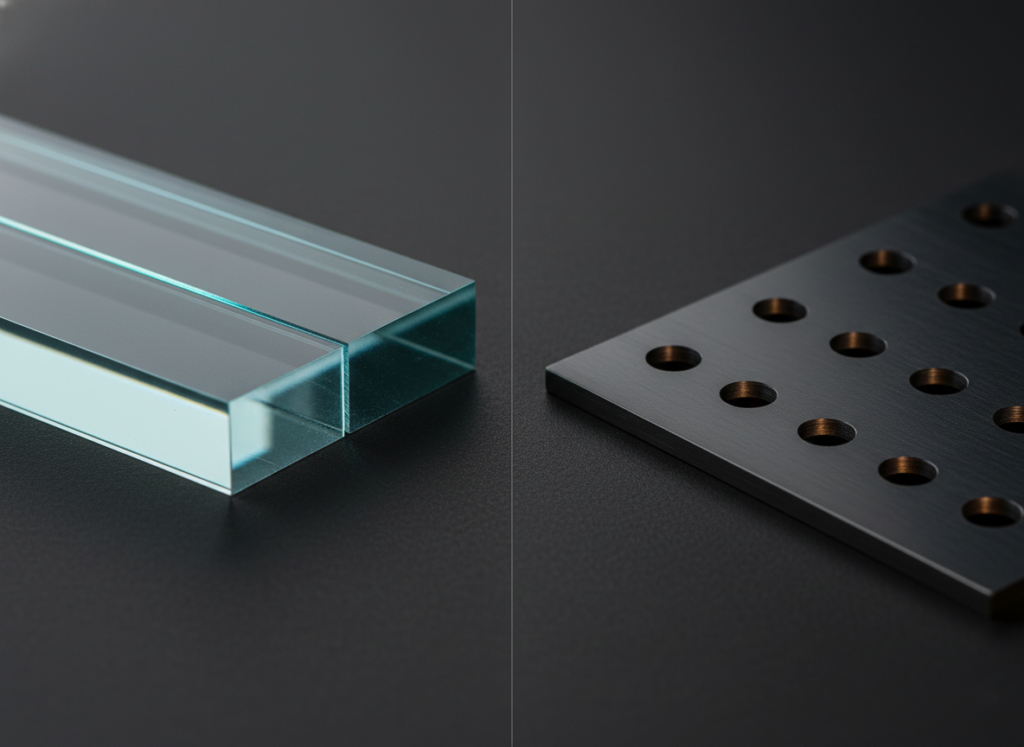
The femtosecond vs picosecond laser question shows up at a specific moment: an engineer is qualifying a process and has to commit capital to one pulse regime before the line scales. Get it wrong, and you either over-pay for precision the part never uses, or you under-spec quality and fail the tolerance during ramp.
What makes the decision hard is that both sit under the same “ultrafast” umbrella. Both produce pulses short enough to deposit energy before heat spreads into the surrounding material, which is why both are described as cold processing. So the marketing language overlaps, the spec sheets look similar, and the real trade-offs stay buried until you run volume.
In our work supporting ultrafast laser micromachining lines across ceramics, glass, PCB, and semiconductor processing, the deciding factors are rarely the headline numbers. They are the heat-affected zone your material can tolerate, the precision your part actually requires, and the cost per finished part once throughput is in the equation. The rest of this article walks through each of those, then gives you a framework to decide.

A femtosecond laser fires pulses typically shorter than one picosecond — in the 500-femtosecond range for many micromachining sources. That number matters for one physical reason: the single pulse is shorter than the time it takes electrons to hand their energy to the material’s lattice, a process called electron-phonon coupling that runs roughly 1 to 10 picoseconds in metals.
Because the energy is gone before the lattice heats, ablation is close to non-thermal. You get the smallest heat-affected zone (HAZ) — the rim of material altered by heat around the cut — the least micro-cracking, and the cleanest edges. For transparent materials like glass and sapphire, the femtosecond pulse also drives multiphoton absorption, which lets you process materials that longer pulses struggle to couple into at all.
That precision has a ceiling, though. Femtosecond sources are harder to scale to high average power; many industrial units sit around 50W. For ultra-fine features, heat-sensitive medical films, or brittle optics, that trade is worth it. For high-volume metal or PCB work, the power ceiling becomes a throughput ceiling.
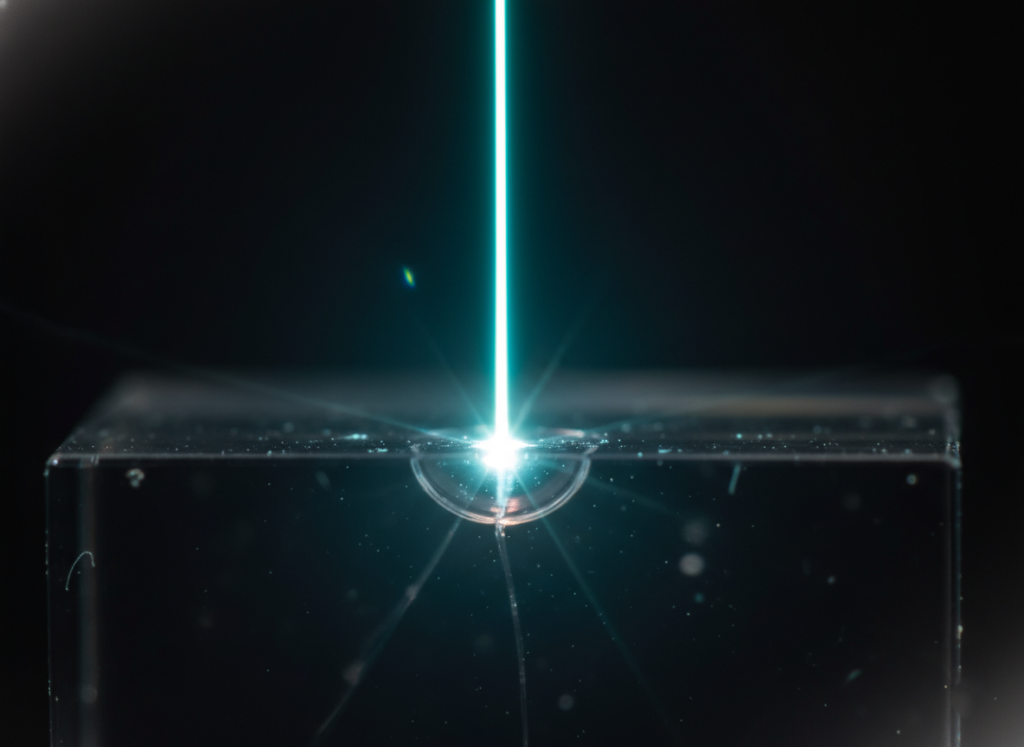
A picosecond laser runs pulses near 10 picoseconds — close to or slightly above that electron-phonon coupling window. There is a small thermal component compared to femtosecond, but next to a nanosecond pulse it is still firmly cold processing, with HAZ that stays under 10µm in well-controlled metal and ceramic cutting.
The advantage shows up in scale. Picosecond architectures reach far higher average power — a high-power picosecond laser can run from 20W to 300W — which translates directly into parts per hour and a lower cost per part. They are also the more mature workhorse for mass production, with the batch-to-batch consistency a production line depends on.
Reaching the upper power band is not trivial. Pushing a picosecond source to 100–300W relies on advanced slab integrated amplification, which is where the real engineering separation between suppliers sits. When picosecond laser precision holds at ±3µm on PCB or ±1µm on alumina ceramic while running at production speed, that is usually what is doing the work underneath.
If your tolerance budget lives in the micron range rather than the sub-micron range, the picosecond pulse is frequently the smarter industrial choice — a point worth holding onto as we compare the two directly.
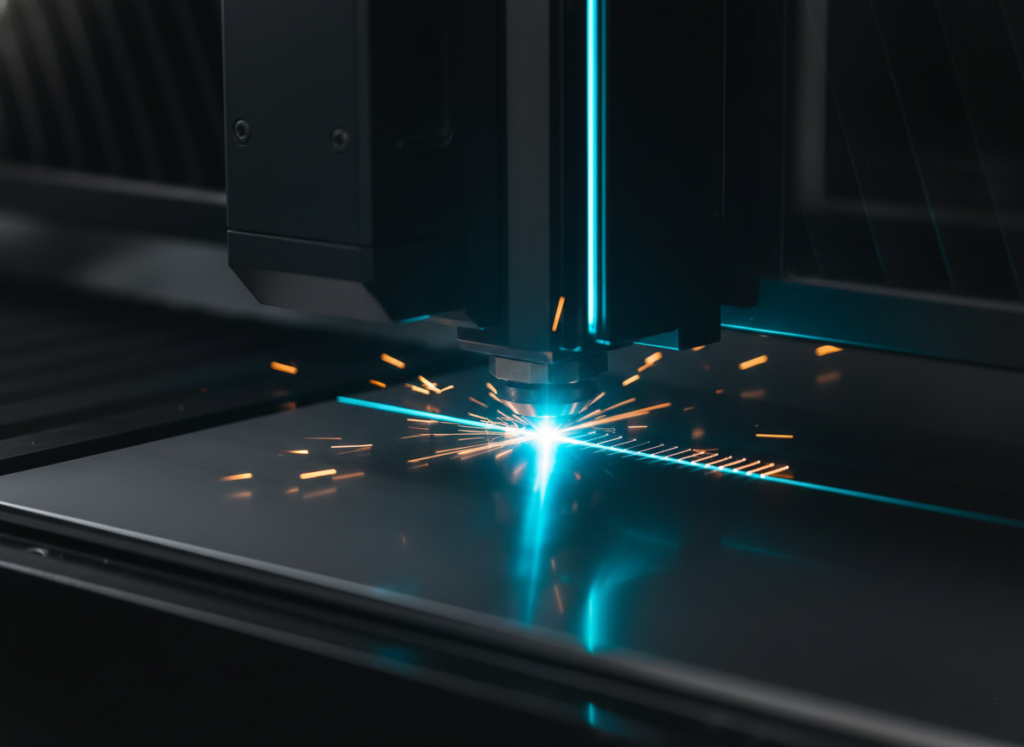
| Dimension | Femtosecond (<1ps) | Picosecond (~10ps) |
|---|---|---|
| Ablation mechanism | Non-thermal, energy deposited before lattice heating | Near-cold, slight thermal component |
| Heat-affected zone | Smallest, down to a few µm | Small, under 10µm in controlled cutting |
| Precision | Sub-micron, the finest available | Micron-level, meets most industrial specs |
| Transparent/brittle materials | Best — glass, sapphire, TGV | Workable |
| Achievable power / throughput | Lower (~50W class) | High (up to 300W) |
| Cost per part at volume | Higher | Lower |
| Mass-production maturity | Precision and high-end work | Production workhorse |
| Typical applications | Glass, sapphire, medical film, micro-structures | Metal, ceramic, PCB, battery, photovoltaic |
The table makes the pattern clear: femtosecond wins on absolute quality, picosecond wins on production economics. Neither column is the better laser. They answer different questions.
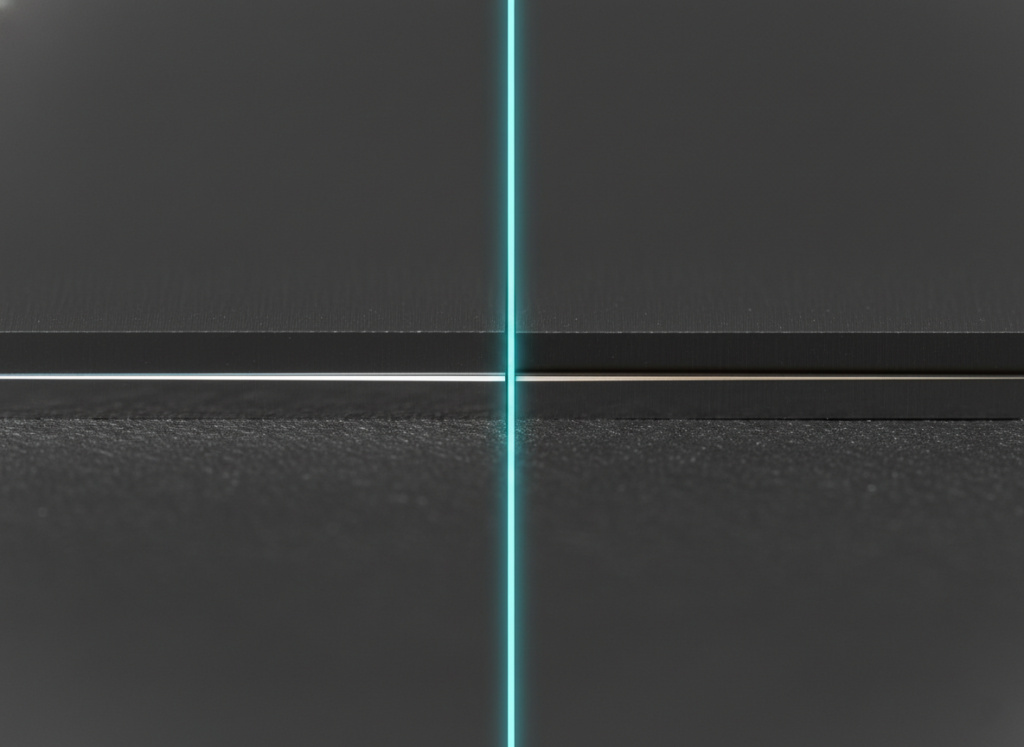
Here is how I would walk you through it. If your material is transparent, brittle, or heat-sensitive — glass, sapphire, thin medical film — and your tolerance is sub-micron, choose femtosecond. The lower heat-affected zone and cleaner edges are the spec, not a luxury.
If your material is metal, ceramic, or PCB, your tolerance is around a micron or a few microns, and you are heading into volume production, choose a high-power picosecond laser. You will hold the spec and win on cost per part. And if you are unsure, run the test the way the engineers above did: process identical samples on both, then measure heat-affected zone, edge quality, and parts per hour. Pick the longest pulse that still passes your quality gate. That rule will steer most femtosecond vs picosecond laser decisions correctly.
Two variables decide more outcomes than the pulse width itself, and neither shows up cleanly on a spec sheet: how your specific material behaves at your repetition rate, and what your real cost per finished part looks like once throughput is included. A high repetition rate can reintroduce heat accumulation even with an ultrafast pulse, which changes the comparison for some materials.
Those details are hard to settle from a product listing alone. If you are qualifying a line at scale, talking to an application engineer who has processed your material can surface trade-offs no datasheet will tell you.
The engineer who switched from a 50W femtosecond source to a 200W picosecond line did not downgrade. They stopped paying for a tolerance their part never asked for. That is the quiet truth underneath the femtosecond versus picosecond debate: the shortest pulse is not the best pulse, only the best pulse for a specific job. Match the laser to the material, the tolerance, and the volume — and the “premium” option is whichever one your part actually needs.
Is a femtosecond laser always better than a picosecond laser? No. A femtosecond laser produces a smaller heat-affected zone and finer precision, which matters for transparent, brittle, or sub-micron work. But for metals, ceramics, and PCBs at micron tolerances, a picosecond laser meets the spec at higher throughput and lower cost per part. Better depends on the application, not the pulse length.
Can a picosecond laser cut glass? Yes, a picosecond laser can cut and drill glass, including profile cutting and through-glass vias. For the cleanest edges on thin or optically sensitive glass, a femtosecond laser reduces chipping further. For many glass cutting jobs at production volume, picosecond delivers acceptable quality with better economics.
What is the heat-affected zone difference between femtosecond and picosecond lasers? A femtosecond laser can hold the heat-affected zone to a few microns because energy is deposited before the lattice heats. A picosecond laser keeps HAZ under roughly 10µm in well-controlled cutting. The gap matters for heat-sensitive materials and is often negligible for robust metals and ceramics.
Which is more cost-effective for mass production? A high-power picosecond laser is usually more cost-effective at volume. Its higher average power — up to 300W — drives more parts per hour, lowering cost per finished part. Femtosecond sources, often near 50W, deliver finer quality but cap throughput, raising unit cost where that extra precision is not required.
What pulse duration counts as femtosecond versus picosecond? Femtosecond pulses are under one picosecond, commonly around 500 femtoseconds in micromachining. Picosecond pulses sit near 10 picoseconds. The threshold matters because the electron-phonon coupling time of most metals falls between them, which is why femtosecond ablation is non-thermal and picosecond is near-cold.
Does a higher repetition rate change the femtosecond vs picosecond decision? Not inherently. However, higher repetition rates reduce single-pulse energy at constant average power. Lower single-pulse energy requires more pulses to reach the material removal threshold, increasing cumulative thermal load and potentially narrowing the practical HAZ advantage of femtosecond lasers for some materials. Repetition rate selection is fundamentally a tradeoff between single-pulse energy and processing efficiency: low repetition rate delivers sufficient pulse energy but reduces throughput; high repetition rate improves throughput but requires higher pulse counts to achieve the same material removal. The femtosecond vs picosecond choice remains independent of this energy-efficiency tradeoff and should be evaluated based on material thermal properties and required HAZ rather than repetition rate alone.
Which laser is better for PCB and flexible circuit cutting? Picosecond lasers, often at 355nm ultraviolet, are well suited to PCB and flex-board cutting, holding ±3µm with burr-free edges and HAZ under 10µm at production speed. Femtosecond is reserved for the most heat-sensitive or sub-micron features where the added precision justifies lower throughput.
How do I choose between femtosecond and picosecond for a new line? Process identical samples on both, then measure heat-affected zone, edge quality, and parts per hour against your tolerance and volume targets. Choose the longest pulse that still passes your quality gate. This keeps you from over-specifying precision the part never uses while protecting the tolerance the application requires.


Why Cold Ablation Matters for Medtech Parts | Laserion says:
[…] when the bulk polymer or metal remains “biocompatible” on the datasheet. Ultrafast pulses (picosecond to femtosecond) remove material with far less collateral melt, recast, and crack risk than longer thermal pulses, […]